Why Institutions Are Moving Assets On-Chain
Discover why establishments are moving property on-chain, exploring tokenization, faster settlement, virtual rails, liquidity, and blockchain infrastructure.
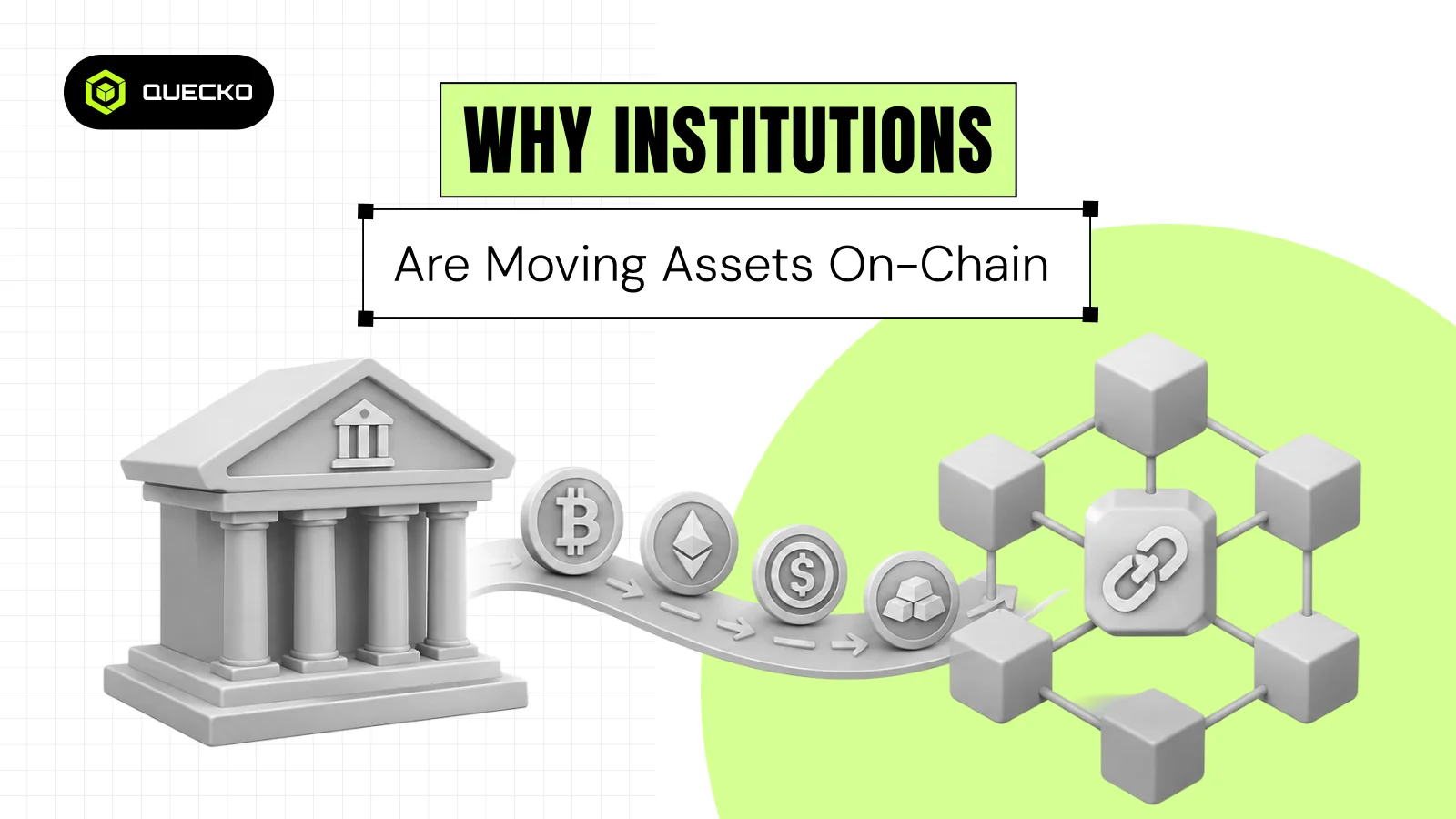
The financial industry is entering a new phase in which financial institutions are increasingly exploring how traditional assets can be represented, managed, and transferred through onchain finance. From tokenized funds and bonds to tokenized real-world assets, institutions are looking at onchain assets and blockchain networks as a way to improve settlement, transparency, liquidity, and operational efficiency.
This shift is not simply about adopting cryptocurrency. Instead, it reflects a broader move toward tokenized financial infrastructure, where blockchain technology and onchain infrastructure can complement existing financial systems while creating new ways to issue, trade, and manage assets. As regulatory clarity develops across major financial markets, institutions are also exploring applications such as tokenized deposits, tokenized real estate, and other blockchain-based financial products.
Companies such as Anchorage Digital are also contributing to the institutional adoption of blockchain-based financial infrastructure, helping demonstrate how regulated digital asset services can connect traditional finance with emerging onchain markets.
For institutions, the question is no longer only whether blockchain has potential. The focus is increasingly on how onchain infrastructure and tokenized assets can solve practical problems across capital markets while supporting greater efficiency, transparency, and accessibility.
What Does Moving Assets On-Chain Mean?
Moving an asset on-chain typically means representing ownership or economic rights associated with an asset via blockchain-based tokens. These on-chain properties can constitute economic units and physical belongings consisting of government bonds, funding price range, non-public credit, commodities, tokenized actual property, or different monetary gadgets.
Rather than relying totally on disconnected databases maintained with the aid of specific intermediaries, onchain finance can provide shared infrastructure for recording transactions, monitoring ownership, and dealing with asset transfers. This onchain infrastructure can potentially streamline approaches that historically depend on multiple systems and intermediaries.
For instance, a tokenized bond may be issued on a blockchain, transferred between eligible contributors, and settled the use of programmable digital infrastructure. Similarly, tokenized deposits can offer a blockchain-primarily based representation of financial institution deposits for specific economic programs. The underlying legal and monetary rights nevertheless require appropriate systems; however, blockchain can make the movement and management of these rights greener.
As regulatory clarity maintains to increase, financial institutions are increasingly inspecting how tokenized real-world belongings can fit within current monetary frameworks. The developing hobby in onchain assets displays a broader transition toward financial markets in which blockchain-primarily based infrastructure works along conventional structures in preference to necessarily replacing them.
1. Faster Settlement
Traditional monetary markets can involve multiple intermediaries, reconciliation procedures, and settlement intervals. These procedures can increase expenses and create operational complexity throughout Wall Street and global financial markets.
On-chain agreements can potentially reduce the number of steps worried in moving assets. Depending at the community and asset type, transactions may be processed constantly as opposed to being confined to traditional market hours.
This creates the opportunity for near-real-time settlement, specifically when tokenized belongings, blockchain-primarily based charge mechanisms, and tokenized deposits function together. Companies including Anchorage Digital have also contributed to the improvement of institutional virtual-asset infrastructure, demonstrating how blockchain technology is being tailored for regulated monetary markets.
For institutional traders, quicker agreement can imply advanced capital efficiency and reduced counterparty and agreement hazard. Similar benefits could ultimately enlarge to tokenized equities, bonds, budget, and other monetary devices.
2. Greater Transparency
Blockchain transactions can offer a verifiable document of activity. Authorized contributors can use on-chain records to monitor transfers, balances, and other applicable records.
This transparency can assist institutions enhance reporting and reconciliation even as decreasing dependence on multiple internal statistics. It additionally creates capacity company use instances beyond economic markets, which includes asset monitoring, compliance, and monitoring throughout complicated deliver chains.
However, institutional blockchain systems do not always require each transaction to be publicly seen. Permissioned networks, privacy technology, and managed get admission to can permit establishments to balance transparency with confidentiality and regulatory necessities.
The broader institutional adoption of blockchain has additionally been discussed with the aid of industry voices and initiatives which include Talking Tokens, consisting of discussions presenting Gregg Bell, highlighting how digital property and tokenization are evolving beyond early cryptocurrency programs.
3. Lower Operational Costs
Blockchain transactions can offer a verifiable document of activity. Authorized contributors can use on-chain records to monitor transfers, balances, and different applicable records.
This transparency can assist institutions enhance reporting and reconciliation even as decreasing dependence on multiple internal statistics. It additionally creates capacity company use instances beyond economic markets, which includes asset monitoring, compliance, and monitoring throughout complicated deliver chains.
However, institutional blockchain systems do not always require each transaction to be publicly seen. Permissioned networks, privacy technology, and managed get admission to can permit establishments to balance transparency with confidentiality and regulatory necessities.
The broader institutional adoption of blockchain has additionally been discussed with the aid of industry voices and initiatives which include Talking Tokens, consisting of discussions presenting Gregg Bell, highlighting how digital property and tokenization are evolving beyond early cryptocurrency programs.
4. Tokenization Can Unlock New Liquidity
One of the largest reasons institutions are exploring on-chain belongings is the opportunity to create more flexible markets for traditionally illiquid assets.
Private credit score, actual property, infrastructure, and certain funding price range will have restricted liquidity because transferring possession may involve lengthy administrative processes. Real-international asset tokenization can constitute these property digitally, making fractional possession, automatic transfers, and secondary-market infrastructure less difficult to broaden.
Tokenization does not automatically make an asset liquid. There must still be sufficient market demand, regulatory compliance, suitable custody, and dependable trading infrastructure. However, establishments are increasingly exploring blockchain-based charge rails, liquidity management, and buying and selling infrastructure which can help those markets.
For example, firms along with Anchorage Digital have explored institutional digital-asset infrastructure, while initiatives inclusive of the Canton Network reveal how blockchain networks may be designed for institutional monetary programs. These traits spotlight how tokenization may want to connect historically illiquid assets with more efficient virtual markets.
5. Programmable Financial Assets
Traditional economic assets are normally passive representations of ownership. Blockchain can make property programmable.
A tokenized asset can include regulations governing who can hold it, where it could be transferred, and under what conditions transactions can occur. This idea additionally extends to tokenized deposits that could integrate conventional financial institution money with programmable blockchain infrastructure.
For institutions, programmable property should support automated compliance exams, company moves, distributions, collateral control, and different monetary procedures. They may additionally allow atomic settlement, wherein the transfer of an asset and the corresponding charge occur simultaneously in preference to via separate settlement techniques.
Industry discussions along with Talking Tokens, which includes perspectives from specialists together with Gregg Bell, have helped highlight how tokenization and programmable economic infrastructure are evolving past easy digital representations of current property.
This creates a shift from honestly digitizing belongings in the direction of building programmable financial infrastructure, where agreement, compliance, and monetary workflows can an increasing number of be embedded directly into the asset and transaction structure.
6. Institutional Access to Global Markets
Blockchain networks function across borders, which may potentially make it simpler to attach participants in one of a kind markets.
Institutions can explore blockchain-based infrastructure for move-border settlement, tokenized securities, stablecoin bills, virtual asset custody, and institutional fee rails. Unlike traditional structures, which can depend upon banking hours and more than one intermediaries, blockchain infrastructure can support 24/7 agreement, challenge to the unique community, asset, and regulatory framework concerned.
Networks along with the Canton Network are being advanced with institutional financial use cases in thoughts, even as corporations consisting of the Enterprise Ethereum Alliance deliver collectively organizations operating on corporation applications of Ethereum-primarily based era.
The practical implementation nevertheless relies upon on nearby guidelines, licensing requirements, tax considerations, and compliance frameworks. Nevertheless, blockchain provides a not unusual technological basis for growing financial programs that could operate across jurisdictions.
For institutions, this may additionally enhance liquidity control with the aid of enabling financial belongings and bills to move thru digital infrastructure outside conventional agreement windows.
7. Growing Interest in Tokenized Funds and Bonds
Institutional blockchain adoption is increasingly more transferring beyond experimentation with cryptocurrencies.
Tokenized money-market budget, authorities securities, personal credit products, tokenized deposits, and other monetary devices have turned out to be vital areas of exploration. The broader boom of actual-international asset tokenization displays this shift in the direction of bringing set up economic merchandise onto blockchain-based infrastructure.
Tokenization can permit institutions to combine familiar monetary products with blockchain-based settlement and ownership infrastructure. Technologies assisting atomic settlement, programmable transfers, and institutional payment rails ought to similarly join tokenized belongings with present monetary structures.
Projects and networks along with the Canton Network, along corporation-focused blockchain initiatives represented by the Enterprise Ethereum Alliance, illustrate the industry’s cognizance on infrastructure that could help institutional-grade economic programs.
The long-term opportunity is not virtually putting bonds, funds, or deposits on a blockchain. It is developing monetary markets where tokenized assets can help with 24/7 settlement, automatic compliance, and more efficient liquidity control.
This should in the end create markets where conventional and virtual property engage inside the equal monetary environment, at the same time as tasks and industry conversations inclusive of Talking Tokens continue to study how establishments can adopt tokenization in realistic financial workflows.
8. Blockchain and Stablecoins Can Work Together
Another critical development is the combination of tokenized assets with blockchain-based totally price mechanisms. Companies consisting of Anchorage Digital have highlighted how institutional digital asset infrastructure can join custody, agreement, and on-chain finance. The developing use of tokenized deposits and on-chain money also suggests how conventional financial institutions are exploring virtual payment rails.
For example, an organization may want to probably use a stablecoin, tokenized deposit, or different regulated digital payment tool to settle a transaction involving a tokenized asset. Discussions inclusive of Talking Tokens, such as views from enterprise figures together with Gregg Bell, have also highlighted the broader evolution of tokenization and digital belongings. Industry activities which include Vault Summit deliver collectively individuals exploring these tendencies, which includes specialists consisting of Redwan Meslem.
This creates a more integrated technique:
Tokenized asset → blockchain transaction → digital fee → automated settlement
Instead of treating asset control and price agreement as completely separate systems, blockchain can bring them nearer together. This ought to guide applications ranging from lending vaults and crypto-subsidized loans to institutional agreement and other sorts of programmable finance.
9. Better Infrastructure for Institutional Finance
Moving property on-chain calls for a great deal more than growing tokens. Institutions want secure wallets, custody answers, smart contracts, compliance structures, blockchain integrations, records infrastructure, and consumer interfaces. Organizations consisting of The Clearing House also are involved in discussions across the modernization of financial charge infrastructure and the function of virtual money.
Institutional applications may additionally operate across specific blockchain environments, from a permissionless blockchain to networks designed with additional access and compliance controls. The infrastructure also can aid specialized belongings and monetary merchandise, together with natively staked SOL, tokenized securities, lending markets, and other digital assets.
This is where specialized blockchain improvement will become critical.
Quecko, a blockchain-based totally improvement and marketing agency, can assist corporations explore blockchain-powered financial infrastructure, which include smart contracts, DeFi structures, wallets, Layer 1 and Layer 2 answers, and actual-world asset tokenization.
For institutions considering tokenization, the generation has to be designed round protection, scalability, regulatory requirements, and the unique traits of the underlying asset. As institutional finance actions towards more related on-chain infrastructure, those abilties can help bridge tokenized property, virtual payments, custody, and programmable monetary offerings.
Challenges Institutions Still Need to Solve
Despite the possibilities, institutional adoption isn’t without challenges.
Regulatory uncertainty remains a chief consideration. Institutions also need to deal with custody, cybersecurity, interoperability, privacy, smart-settlement risks, liquidity, and integration with legacy financial systems. Emerging fashions consisting of tokenized deposits and on-chain money also require clear regulatory treatment, especially as monetary institutions discover blockchain-based digital rails for payments and agreement.
Another assignment is that tokenization on my own does now not create a functioning market. Institutions want depended on counterparties, compliant structures, dependable liquidity, and clear felony frameworks. Initiatives mentioned via enterprise events which include Talking Tokens and Vault Summit spotlight the growing consciousness on realistic tokenization infrastructure, while companies along with The Clearing House maintain to take a look at how virtual financial systems can combine with current banking infrastructure.
Technology structure is some other attention. Some establishments may prefer a private, permissioned blockchain for greater manage over get admission to, compliance, and statistics privacy, whilst others can also use public networks. Regardless of the approach, standardized interfaces and interoperable infrastructure may be essential for connecting distinctive systems, assets, and financial systems.
Institutions also are experimenting with blockchain-primarily based financial products which includes lending vaults and assets together with natively staked SOL, demonstrating how on-chain infrastructure can aid more and more numerous monetary packages.
Therefore, the transition to on-chain finance is possibly to be sluggish rather than an in a single day substitute of conventional markets.
The Future of Institutional Assets On-Chain
The movement of property onto blockchain networks represents a broader transformation in economic infrastructure.
Institutions are exploring blockchain because it is able to potentially combine quicker agreement, programmable ownership, improved transparency, computerized processes, and new liquidity models. As tokenized deposits, on-chain cash, and other blockchain-primarily based financial instruments broaden, virtual belongings could increasingly more perform across related digital rails in place of isolated structures.
The lengthy-time period opportunity may additionally enlarge past virtually putting current property on a blockchain. It ought to contain creating a wholly new economic infrastructure wherein property, payments, compliance, custody, and settlement have interaction via programmable systems. Standardized interfaces and interoperable infrastructure may want to emerge as specially crucial as institutions join non-public networks, public blockchains, economic packages, and traditional banking systems.
As tokenization keeps to increase, establishments that apprehend each the technological and regulatory dimensions will be higher positioned to take part in the next era of economic markets.
For corporations comparing this transition, operating with skilled blockchain builders and strategists can assist flip tokenization ideas into secure, practical products. Quecko can assist corporations exploring blockchain development, tokenized property, DeFi infrastructure, lending vaults, and different Web3 economic answers.
Frequently Asked Questions (FAQs):
1. What does it mean to move assets on-chain?
Moving assets on-chain means representing ownership or economic rights through blockchain-based tokens and using blockchain infrastructure to manage, transfer, or settle those assets.
2. Why are institutions interested in asset tokenization?
Institutions are exploring tokenization because it is able to potentially improve agreement speed, transparency, automation, liquidity, and operational performance.
3. What assets can be tokenized?
Potentially tokenized assets include authorities bonds, money-marketplace budget, personal credit score, real estate, commodities, funding budget, and different real-global belongings.
4. Does tokenization automatically make an asset liquid?
No. Tokenization can make property simpler to switch and create new market systems, however liquidity nevertheless relies upon on demand, market infrastructure, law, and participation.
5. Are on-chain assets secure?
Security relies upon the blockchain, smart contracts, custody infrastructure, pockets control, and operational controls being used. Institutional implementations require strong safety and hazard-control practices.
6. Can blockchain work with traditional financial systems?
Yes. Blockchain infrastructure can be integrated with existing financial systems rather than completely replacing them. Many institutional applications focus on connecting on-chain and traditional infrastructure.
7. What role do smart contracts play?
Smart contracts can automate policies and procedures related to virtual property, which include transfers, compliance situations, payments, distributions, and other predefined movements.
8. How can Quecko help with institutional blockchain projects?
Quecko can help blockchain improvement and Web3 tasks concerning clever contracts, DeFi, wallets, Layer 1/Layer 2 infrastructure, and real-global asset tokenization, along blockchain-targeted approach and marketing.
Author

Sheeba Abbasi
Digital Marketer and Social Media StrategistHi! I'm Sheeba Abbasi, a Digital Marketer, Social Media Strategist, and Content Creator specializing in Web 3.0 and Blockchain, with expertise in content development, community engagement, strategic planning, and technical writing.

Date
2 months agoShare on

Related Blogs

Beyond Endorsements: Why Equity-First Models Are Redefining the Player-Owned Economy
5 days ago
Modular Blockchains Are Killing Monolithic Chains — Here’s Why Rollup Stacks Are Winning in 2026
7 days ago
USDT vs USDC: Which Stablecoin Is Better for Enterprise Digital Infrastructure in 2026?
11 days ago
How Businesses Use Stablecoins for International Transfers
14 days ago