Beyond Endorsements: Why Equity-First Models Are Redefining the Player-Owned Economy
The conventional endorsement version extracts attention and returns nothing permanent. An athlete signs and symptoms, a marketing campaign runs, an agreement expires; and the logo keeps the equity whilst the player retains a take a look at that stopped compounding the instant it cleared. That mathematics is no longer ideal to a technology of athletes […]
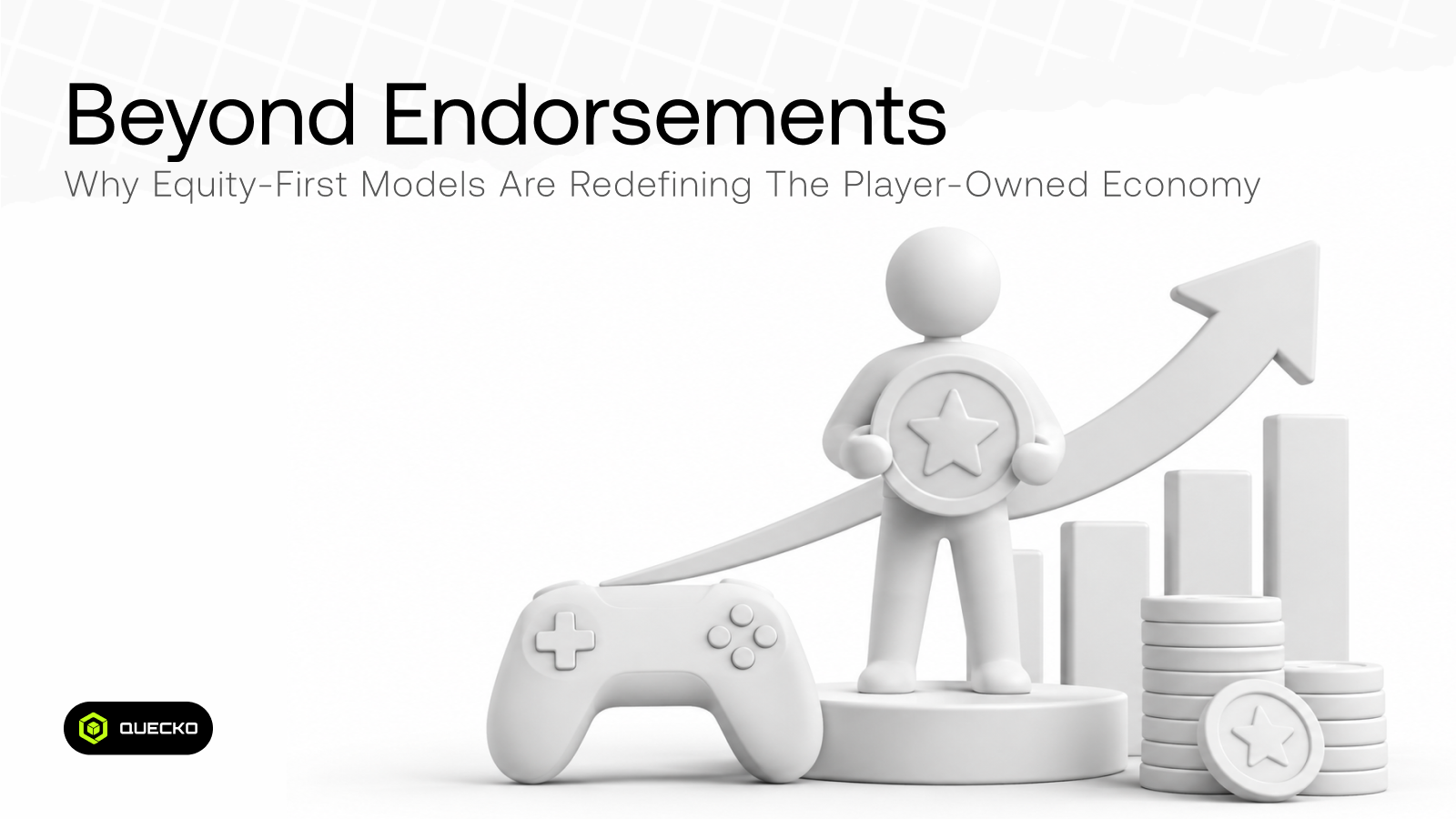
The conventional endorsement version extracts attention and returns nothing permanent. An athlete signs and symptoms, a marketing campaign runs, an agreement expires; and the logo keeps the equity whilst the player retains a take a look at that stopped compounding the instant it cleared. That mathematics is no longer ideal to a technology of athletes who recognize cap tables, and it’s no longer aggressive for digital product leaders who want partners with pores and skin in the sport rather than talent on retainer.
The future of Web3 gaming, athlete-led platforms, and direct-to-fan trade converges on a single structural insight: ownership is extra durable than publicity. Where the primary wave of digital sports merchandise sold access and attention, the following era is being constructed around fairness participation; athletes as founding partners, fans as asset holders, and structures as the infrastructure that makes those relationships legally and financially legible.
This article is written for the founders, product owners, and marketing executives who are constructing or evaluating that infrastructure. The argument is easy: the Player-Owned Economy isn’t always a branding fashion. It is a capital shape, and it calls for software programs designed from the primary architecture decision to aid fairness presents, vesting schedules, multi-jurisdictional tax occasions, and institutional-grade reporting. The sections that follow trace the economic good judgment riding this shift, the operational necessities it creates, and the product selections that decide whether or not a platform can in reality assist it.
The Structural Shift from Hired Faces to Business Owners in the Future of Web3 Gaming
A seven-discern endorsement test cashes as soon as. Its price range, a marketing campaign cycle, expires with the settlement, and leaves the athlete maintaining nothing, however a residual association with a logo they do not own. For a technology of gamers whose income window is compressed into a decade or much less, that mathematics has stopped working; the upside sits totally at the brand’s facet of the table.
The common price of an NFL franchise in 2026 reached $five.7 billion, signaling the large scale of sports activities as an asset class. That number reframes the verbal exchange. Athletes running inside an environment of that value more and more refuse to be line gadgets in an advertising price range when they can be entries on a cap desk.
The Player-Owned Economy describes that convergence: sports, generation, and task capital collapsing right into a single running model wherein the athlete features as a founding partner instead of a licensed face. The same ownership good judgment is reshaping digital products: play-to-personal video games, for instance, are constructed around long lasting asset accumulation rather than brief praise streams, making them a natural suit for athlete-anchored ecosystems where long-time period equity alignment topics. Global private equity deal volume multiplied by 22% in 2024, reflecting a broader trend of institutional capital coming into areas of interest markets; and institutional investors currently keep stakes in seventy four North American expert groups. Sports executives predict international enterprise increase of seven.3% over the following three-5 years.
For virtual product leaders, the outcome is structural. Ownership must be constructed, tracked, and administered someplace, and that someplace is a software program.
Why Private Equity and Institutional Capital are Flooding the Field
The capital tale right here isn’t a sports activities tale. It is a broader allocation tale that happens to have located an surprisingly attractive landing region. Global private fairness deal volume extended by means of 22% in 2024, a signal that institutional cash had both dry powder and appetite for sectors previously handled as too idiosyncratic to underwrite.
Professional sports qualified on numerous counts: contracted media revenue, inelastic fan call for, scarce supply of franchises, and valuation records that rewarded persistence. League rule adjustments that opened the door to out of doors possession did the rest. Institutional investors currently keep stakes in 74 North American professional teams, a footprint that might have been structurally not possible a decade earlier.
What follows that cash is operational pressure. Funds underwriting a franchise or an athlete-led emblem count on reporting area, measurable engagement, and revenue traces that may be modeled in place of predicted. Legacy ticketing systems and a sponsorship spreadsheet do not fulfill that. The capital influx is therefore inseparable from calls for virtual transformation in sports: facts, infrastructure, direct-to-fan trade, and possession management tooling that institutional diligence can absolutely read.
Sports stopped being a conceitedness keeping and have become an investable asset magnificence. Asset training requires instrumentation.
The Mechanics of Equity-Based Compensation for Modern Athletes
Equity-based total repayment replaces an assured price with a declare on destiny business enterprise value. The athlete contributes reach, credibility, and frequently direct operational involvement; the corporation conserves coins and converts an advertising rate into an alignment mechanism. The exchange is liquidity nowadays for leverage later.
An endorsement pays for interest; equity will pay for attention compounding over years. If an accomplice ‘s business reaches an acquisition or public listing, the athlete’s role converts from a promotional credit score right into a balance-sheet asset; the single biggest variable in long-horizon net worth for plenty of players.
The change-offs are real. Equity is illiquid, often diluted, and sometimes worthless. Vesting schedules out survive gambling careers.
This is in which virtual product owners input. Platforms courting athlete partners want to be cap-table-ready from the first structure selection: smooth fairness data, auditable furnish documentation, position-based totally get entry to for advisors, and reporting that survives diligence.
Building ‘The Players Company’: Operations and Venture Literacy
The Players Company version treats the athlete-proprietor as a small group in place of a personal investor. That organization desires three capabilities running in parallel, and each one is a software requirement earlier than it is a staffing choice. Digital transformation in sports has made this architecture now not just viable however important; the identical records infrastructure that institutional investors now call for from franchises applies similarly to the athlete-owned ventures sitting inside those ecosystems.
Operations: An athlete-owner manages a portfolio of commitments; logo roles, direct investments, personal ventures; without a principal gadget of report. Fragmentation is the default failure mode. Consolidation is the primary operational win. Single dashboard for all holdings, grants, and vesting events. Document vault with permissioned consultant get right of entry to – Calendar logic that respects season, tour, and training constraints – Entity-degree separation among private, commercial enterprise, and investment activity
Venture Literacy: Signing a time period sheet without reading it is a massive threat. Literacy right here isn’t non-obligatory training; it’s miles hazard control, and proper tooling teaches at the same time as it tracks. Cap table control with dilution modeling throughout future rounds – Plain-language motives of liquidation possibilities and pro-rata rights – Vesting and cliff visualizations tied to real dates – Scenario perspectives displaying outcomes at extraordinary exit valuations
Tax Strategy: Athlete income is often multi-jurisdictional. Layering fairness occasions on pinnacle of jock-tax publicity, international look earnings, and entity structures creates reporting complexity that spreadsheets can’t take in. Multi-nation and move-border profits attribution – Flagging of taxable activities on furnish, vest, and exercise – Export formats that advisors and accountants can use without rework The interface decides whether or not any of that is used. High-net- worth customers abandon tools that sense like accounting software, so UI/UX great is a retention requirement, now not a polish item. Closing those know-how gaps is what separates athlete entrepreneurship from athlete speculation.
Operations
An athlete-owner manages a portfolio of commitments; brand roles, direct investments, personal ventures; with no central system of record. Fragmentation is the default failure mode. Consolidation is the first operational win.
- Single dashboard for all holdings, grants, and vesting events
- Document vault with permissioned advisor access
- Calendar logic that respects season, travel, and training constraints
- Entity-level separation between personal, business, and investment activity
Venture Literacy
Signing a term sheet without reading it is the most expensive mistake in the category. Literacy here is not optional education; it is risk management, and good tooling teaches while it tracks.
- Cap table management with dilution modeling across future rounds
- Plain-language explanations of liquidation preferences and pro-rata rights
- Vesting and cliff visualizations tied to real dates
- Scenario views showing outcomes at different exit valuations
Tax Strategy
Athlete income is already multi-jurisdictional. Layering equity events on top of jock-tax exposure, international appearance income, and entity structures creates reporting complexity that spreadsheets cannot absorb.
- Multi-state and cross-border income attribution
- Flagging of taxable events on grant, vest, and exercise
- Export formats that advisors and accountants can use without rework
The interface decides whether any of this is used. High-net-worth users abandon tools that feel like accounting software, so UI/UX quality is a retention requirement, not a polish item. Closing these knowledge gaps is what separates athlete entrepreneurship from athlete speculation.
Operations
An athlete-owner manages a portfolio of commitments, brand roles, direct investments, private ventures, with no imperative device of document. Fragmentation is the default failure mode. Consolidation is the primary operational win.
- Single dashboard for all holdings, offers, and vesting events
- Document vault with permissioned consultant get admission to:
- Calendar common sense that respects season, journey, and education constraints
- Entity-level separation among personal, enterprise, and funding interest
Venture Literacy
Signing a term sheet without analyzing its miles is the most high priced mistake inside the class. Literacy right here isn’t always non-obligatory training; it’s far chance control, and appropriate tooling teaches even as it tracks.
- Cap table management with dilution modeling throughout destiny rounds
- Plain-language causes of liquidation alternatives and pro-rata rights
- Vesting and cliff visualizations tied to actual dates
- Scenario views showing outcomes at exclusive go out valuations
Tax Strategy
Athlete profits are already multi-jurisdictional. Layering equity activities on pinnacle of jock-tax publicity, international appearance profits, and entity structures creates reporting complexity that spreadsheets can not absorb.
- Multi-nation and pass-border profits attribution
- Flagging of taxable occasions on supply, vest, and workout
- Export formats that advisors and accountants can use with out transform
The interface decides whether any of this is used. High-internet-really-worth customers abandon tools that have experience like accounting software, so UI/UX great is a retention requirement, now not a polish item. Closing these information gaps is what separates athlete entrepreneurship from athlete speculation.
Monetizing Digital Fandom Through Sustainable Play-to-Own Models
The first wave of token-pushed gaming promised earnings and brought extraction. Play-to-earn economies paid users in freshly minted assets whose value depended on an uninterrupted supply of latest entrants, a shape that collapses the moment growth slows, because the reward changed into in no way tied to whatever durable.
Play-to-personal games invert common sense. Participants gather assets with standalone application; get admission to, governance weight, scarce digital goods, revenue participation; in preference to a yield move that has to be inflated into existence. Value accrues due to the fact the underlying environment produces something, now not because the subsequent cohort arrives on schedule. That difference determines whether a virtual economy survives its first downturn.
Athletes are strangely nicely placed to anchor these ecosystems. They deliver a community that already exists, already self-identifies, and already transacts. When an athlete holds fairness within the platform instead of a promotional price, their incentive shifts from riding sign-ups to protecting long-term asset value; the identical incentive the community holds.
Sports executives expect worldwide enterprise growth of seven.3% over the subsequent three-5 years.
The future of web3 gaming in this context looks less like speculative buying and selling flooring and extra like co-owned fan infrastructure, wherein monetizing virtual fandom manner dispensing possession rather than harvesting interest.
Key Takeaways for Digital Product Leaders
The running implications for all people constructing in this space reduce to a brief list.
- Equity is the foreign money of pinnacle-tier athlete partnerships. A cash-only provider competes towards a stake within the business, and an increasing number of losses to it.
- Cap-desk readiness is a product requirement, not a felony afterthought. Ownership records, supply documentation, and vesting common sense belong inside the structure from day one.
- Institutional capital units the reporting bar. Platforms serving athlete-proprietors are studied through finances, advisors, and auditors; constructed for diligence, no longer for demos.
- Tax complexity is the main factor of failure. Multi-jurisdictional profits and equity occasions generate obligations that ruin ad-hoc systems and erode agreement rapidly.
- Earn mechanics decay; own mechanics compound. Design economies wherein members keep belongings with intrinsic utility as opposed to yield that relies upon on non-stop person boom.
- Interface excellent determines adoption. The maximum state-of-the-art ownership version fails if the people conserving the fairness will no longer open the dashboard.
Each of those is a build selection. None of them can be retrofitted affordably as soon as a platform has athlete partners on the cap desk.
Designing the Infrastructure of the Player-Owned Future
The shift from hired face to equity proprietor adjustments what sports-tech software programs has to do. These systems carry ownership records, cross-border tax activities, network governance, and trade in a single product; and they’re examined by buyers and regulators as regularly as by way of fans. That workload does not come from an off-the-shelf stack assembled in ranges. It comes from included design and engineering squads operating towards one structure, in which the information model, the compliance layer, and the interface are designed together instead of negotiated in a while.
High-stop UI/UX is the finding out factor. Equity structures, dilution scenarios, and vesting schedules are honestly hard standards; the product’s process is to cause them to be legible to a person reviewing holdings between training classes. Clarity at that stage is what converts a complicated possession version into something people genuinely use.
An industry developing on the pace executives venture will praise the systems which might be equipped to manage possession, no longer merely market it. End-to-stop digital transformation; approach, layout, construct, and scale; is how that readiness is created.
Quecko builds custom software programs for groups designing the infrastructure of the participant-owned economic system. Start a communication about what you are constructing.
The average value of an NFL franchise in 2026 reached $five.7 billion, signaling the massive scale of sports as an asset magnificence.
Source: PwC
Frequently Asked Questions (FAQs):
1. What is a fairness-first model within the participant-owned financial system?
An equity-first model gives gamers an immediate stake in the games, platforms, or digital ecosystems they make contributions to. Instead of receiving handiest rewards, sponsorship advantages, or promotional incentives, gamers can take advantage of ownership rights and take part within the lengthy-time period fee created by the ecosystem.
2. How do fairness-first models differ from conventional gaming endorsements?
Traditional endorsements typically compensate players for promoting an emblem or product. Equity-first fashions cross further by presenting possession possibilities, allowing players to benefit from the boom and fulfillment of the platforms they guide in place of receiving simplest one-time payments or fixed sponsorship charges.
3. Why are fairness-first models gaining interest in Web3 gaming?
Web3 gaming introduces blockchain-based total ownership, transparent transactions, and tokenized ecosystems. These capabilities make it possible to create new ownership structures in which players can participate in platform governance, contribute to community increase, and doubtlessly share within the monetary fee they help generate.
4. How does blockchain assist player ownership?
Blockchain affords transparent and verifiable facts of digital possession via smart contracts and tokenization. It allows gamers to hold virtual belongings, get entry to unique participation rights, and have interaction with decentralized gaming ecosystems without relying absolutely on centralized intermediaries.
5. What position do players have in a fairness-first gaming environment?
Players grow to be greater than purchasers or promotional companions. Depending on the platform’s shape, they can make a contribution to governance, network improvement, content advent, testing, and atmosphere enlargement whilst getting access to possession or economic participation opportunities.
6. Can equity-first fashions create long-time period fees for gaming groups?
Yes. By aligning participant incentives with platform growth, fairness-first fashions can inspire deeper engagement, stronger community participation, and lengthy-term commitment. However, their success depends on sustainable tokenomics, transparent ownership structures, and proper fee advent.
7. What challenges ought to restrict the adoption of fairness-first fashions?
Key challenges encompass regulatory uncertainty, uncertain possession rights, token volatility, inadequate governance mechanisms, and unsustainable praise structures. Gaming platforms have to set up obvious participation guidelines and viable financial fashions to ensure that participant ownership provides meaningful benefits instead of short-time period incentives.
Author

Sheeba Abbasi
Digital Marketer and Social Media StrategistHi! I'm Sheeba Abbasi, a Digital Marketer, Social Media Strategist, and Content Creator specializing in Web 3.0 and Blockchain, with expertise in content development, community engagement, strategic planning, and technical writing.

Date
5 days agoShare on

Related Blogs
Modular Blockchains Are Killing Monolithic Chains — Here’s Why Rollup Stacks Are Winning in 2026
7 days ago

USDT vs USDC: Which Stablecoin Is Better for Enterprise Digital Infrastructure in 2026?
11 days ago

How Businesses Use Stablecoins for International Transfers
14 days ago