What Is DePIN in Crypto?
Learn how decentralized infrastructure works, explore key examples, rewards, benefits, risks, and real-world uses.
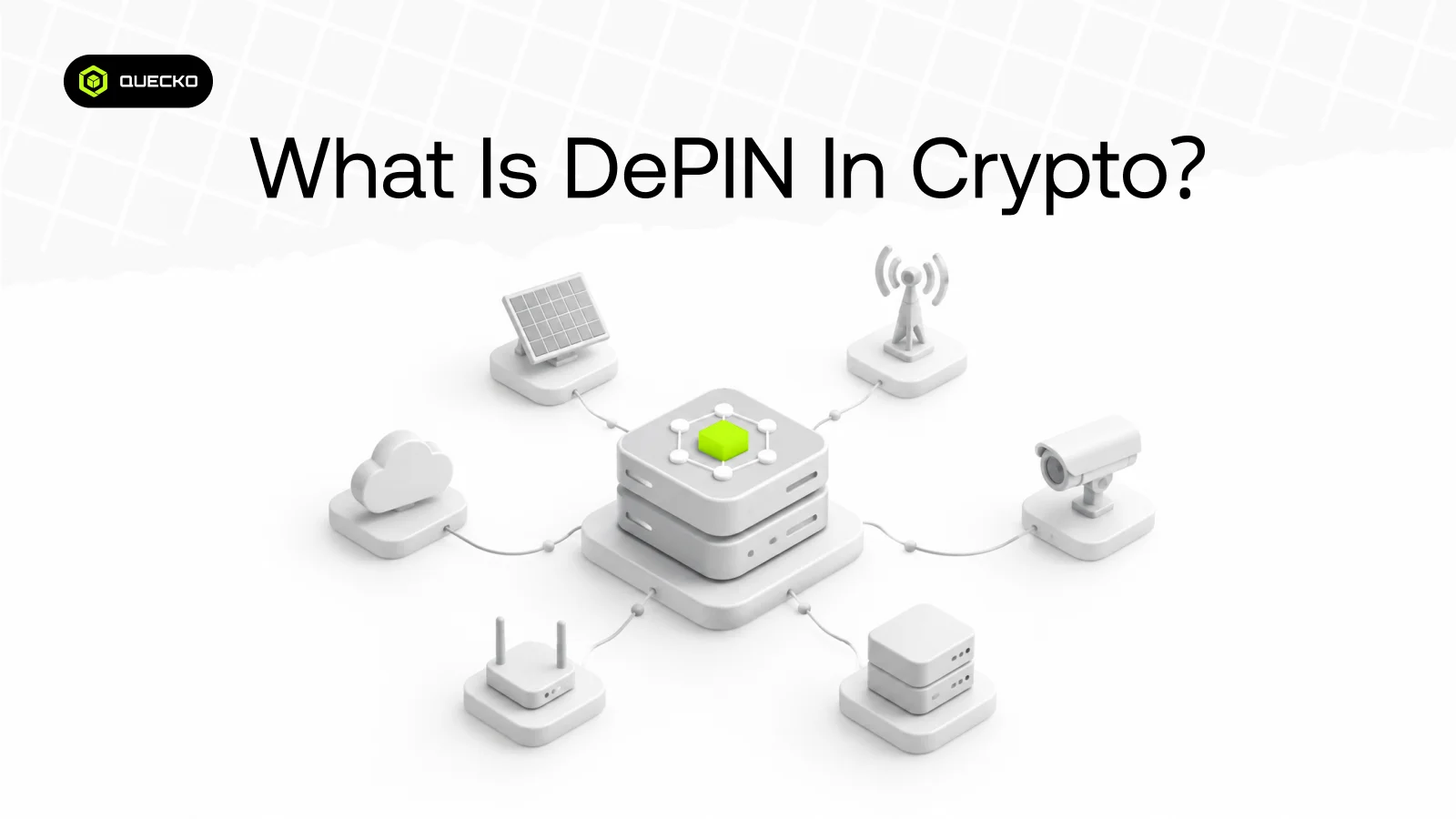
DePIN stands for Decentralized Physical Infrastructure Networks. One way of thinking about DePIN is as the convergence of blockchain and physical hardware, i.e., infrastructure. Instead of one company monopolizing hardware, people who provide the necessary inputs get rewards in tokens by supplying wireless coverage, computing power, data storage, map information, sensors, or electricity.
According to Statista, the worldwide digital assets market is expected to bring US$100.8B in revenue in 2026. User penetration will be 9.9%. Right now, the crypto market’s overall market cap already signals the scale of the ecosystem DePIN will be part of.
DePIN is one of numerous crypto industry strategies to bring the sector down to earth – moving from purely digital applications to something real-world through utility.
What Is DePIN in Crypto?
DePIN is a physical infrastructure development model through decentralized networks and incentives. Resource providers come first; the network verifies their contributions, and blockchain systems record the actions and issue rewards.
Consider it like a community-built system. While a typical telecom company constructs and maintains its own network, a DePIN wireless project can bring together various independently run hotspots. This idea can also extend to GPUs, storage drives, cameras, sensors, or energy devices.
Decentralized exchanges let users trade directly with one another without needing a central authority. Similarly, DePIN uses a distributed model for physical infrastructure. On the other hand, centralized exchanges function through a single organization, which emphasizes the key differences between centralized and decentralized systems.
How Does DePIN Work?
DePIN networks connect three pieces:
Physical infrastructure: Devices provide the actual resource, such as bandwidth, storage, computing power, or sensor data.
Verification and middleware: The network checks whether a contribution is real and useful. This can involve proof-of-coverage, proof-of-location, or proof-of-contribution.
Blockchain and tokens: On-chain systems record activity and distribute rewards according to the protocol’s rules, using blockchain technology to provide a transparent record of contributions. For participants, these rewards can feel similar to earning crypto coins, although each DePIN project has its own token and reward system. Different blockchain protocols can be used to record contributions, manage rewards, and coordinate participants across the network.
This creates a feedback loop: contributors increase capacity, while useful services attract users.
What Are the Main Types of DePIN?
DePIN projects generally fall into several categories:
- Wireless networks provide decentralized connectivity through hotspots or radio hardware. These networks can help extend internet access by coordinating connectivity through independently operated hardware. Newer wireless technologies, such as Wi-Fi HaLoW, can also open up possibilities for low-power, long-range connectivity.
- Compute networks let users contribute GPU capacity for workloads such as AI or rendering. This computing capacity can also support AI models that require significant processing resources.
- Storage networks turn spare disk capacity into distributed data storage. Users can contribute storage drives and make their unused capacity available to the network.
- Sensor and mapping networks collect real-world information through cameras, autonomous vehicles, and other devices. Some of these systems can also support an IoT network by connecting physical devices and sensors to decentralized infrastructure. They can collect everything from mapping information to readings from air and weather sensors. This also connects DePIN with the Internet of Things, where connected devices can share real-world data across decentralized networks.
- Energy networks coordinate distributed generation, storage, or energy-related infrastructure. They can also connect distributed energy grids and other energy resources across a network.
What Are Some DePIN Examples?
Well-known examples show the range of the model. Helium focuses on decentralized wireless networks, Filecoin on decentralized storage, Render on distributed GPU rendering, and Hivemapper on crowdsourced mapping data. Participants in the Helium ecosystem can receive HNT tokens according to the network’s reward mechanisms. Together, they show how blockchain incentives can coordinate physical resources through projects such as the Helium Network. Akash Network is another example, allowing users to access computing resources through a decentralized marketplace.
These projects are among the most visited names when people explore DePIN and decentralized infrastructure. These decentralized networks use different incentive models depending on the type of resource they provide.
How Do DePIN Tokens Support Decentralized Infrastructure?
DePIN can also be used in everyday infrastructure, like energy supply and digital storage. For instance, devices that generate energy can add electricity or storage capacity to a network. This setup lets participants work together to manage resources from various locations. The same concept holds true for digital infrastructure as well.
The value of these rewards depends on the network’s activity, demand, and token economics. When more contributors join, the network can expand its available resources and create a tokenized ecosystem where participants, service providers, and users interact through blockchain-based incentives.
However, earning DePIN tokens is only one part of the model. A sustainable network also needs real users and demand for the services being provided. If the infrastructure is not being used, token incentives alone may not create long-term value.
How Can DePIN Support Energy and Cloud Infrastructure?
DePIN can also be applied to infrastructure that people use every day, including energy supply and digital storage. For example, distributed energy devices can contribute electricity or storage capacity to a network, allowing participants to coordinate resources across different locations.
The same idea applies to digital infrastructure. Instead of depending on one provider for cloud storage, users can contribute unused storage capacity to a decentralized network. This can create a distributed alternative where data is stored across multiple independent participants. Decentralized cloud storage can also make use of spare capacity that might otherwise remain unused.
These applications show how DePIN can extend beyond crypto-native services. By connecting physical devices and digital resources through blockchain-based coordination, DePIN can create infrastructure networks that are distributed across many contributors rather than controlled entirely by one provider.
Why Is DePIN Important?
DePIN can change how infrastructure is deployed. A network can distribute deployment costs among many participants, potentially expanding coverage and unlocking unused resources. Physical infrastructure can be built and expanded through contributions from participants across a network. At its core, the model uses tokenized incentives to encourage people to contribute resources that the network actually needs. DePIN can also support supply chain management by providing decentralized infrastructure for tracking physical assets, locations, and data. DePIN can also have applications in transportation systems, where connected devices can help collect and coordinate real-world data.
By combining blockchain technology with physical resources, these networks can coordinate contributions without putting all infrastructure under one organization. However, token rewards alone do not guarantee success. The infrastructure still needs users, reliable hardware, sustainable economics, and demand.
What Are the Risks of DePIN?
The biggest questions are practical. Hardware can be expensive to purchase and maintain, token rewards can change in value, and early networks may attract contributors faster than paying customers. Community discussions reflect this tension: Hivemapper participants on Reddit have questioned whether data demand is strong enough to justify costs.
A useful distinction is that a DePIN project should be evaluated not only by device count or token incentives, but also by service quality, utilization, customers, and revenue.
DePIN and the Future of Web3
DePIN connects blockchain technology with infrastructure, making it relevant to AI compute, wireless connectivity, data storage, mapping, and energy. These decentralized networks can connect physical resources with users without relying on a single infrastructure provider. As crypto matures, practical utility could make DePIN an important part of Web3 infrastructure.
This can include infrastructure used to train, run, or support AI models across distributed computing networks.
How Quecko Can Help Build DePIN Solutions
Quecko works across Web3 and blockchain engineering, including Layer 1 and Layer 2 development, smart contracts, decentralized applications, RWA tokenization, and infrastructure-focused solutions. For DePIN, this stack can support token incentives, smart contracts, applications, backends, and blockchain integrations.
We can also help connect the blockchain layer with the applications and infrastructure that contributors actually use, from user dashboards to reward systems and data flows. This helps make it simpler to integrate physical resources into a decentralized network that’s practical and easy to use. The aim is to develop DePIN solutions based on real-world applications, dependable infrastructure, and ongoing network involvement.
Conclusion
So, what is DePIN in crypto? It is a way to coordinate infrastructure through decentralized contributors, blockchain verification, and token incentives.DePIN focuses on transforming various distributed resources, like wireless networks, storage, GPUs, and mapping tools, into practical digital infrastructure. It also provides the cryptocurrency sector with a means to link blockchain incentives to tangible infrastructure. For DePIN to be truly valuable in the long run, it needs genuine demand, dependable networks, and an economy that can sustain itself.
FAQs
1. What does DePIN stand for?
DePIN stands for Decentralized Physical Infrastructure Networks. It describes blockchain-based networks that coordinate physical resources through decentralized contributors and token incentives.
2. How do people earn from DePIN?
Participants can earn tokens by contributing resources such as wireless coverage, computing power, storage, mapping data, or sensor information. Rewards depend on each network’s rules and demand.
3. Is DePIN only used for physical infrastructure?
No. While DePIN primarily targets physical infrastructure, it can also involve digital resources like computing power, data, and storage. This versatility enables DePIN networks to link real-world devices with digital services and blockchain coordination.
Author

Khola Abbasi
Blockchain & Crypto Marketing SpecialistA writer with a focus on DeFi and smart contracts. I simplify technical topics through clear, engaging content. Sharing ideas, insights, and what I'm learning.
Date
2 months agoShare on

Related Blogs

Beyond Endorsements: Why Equity-First Models Are Redefining the Player-Owned Economy
5 days ago
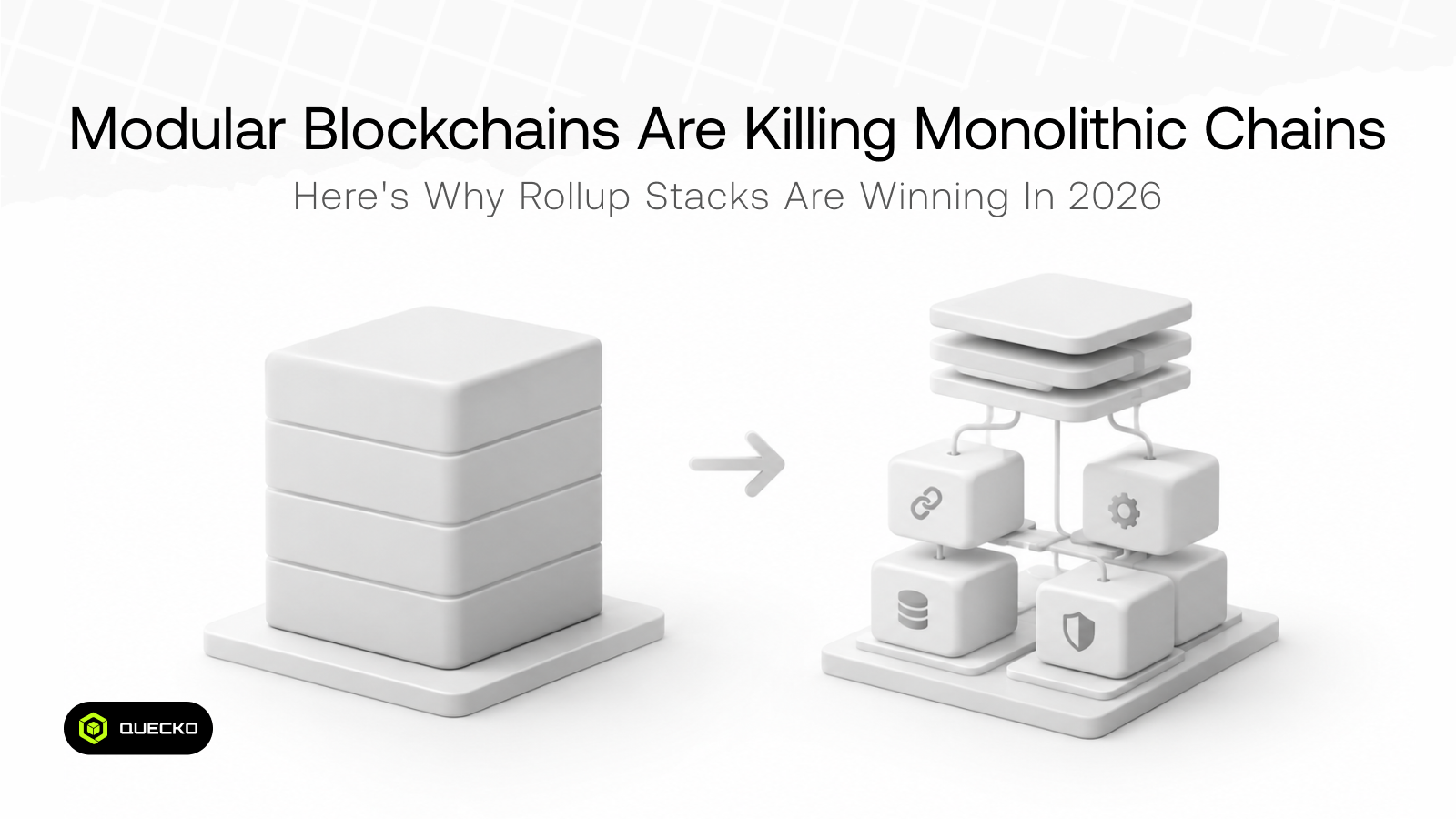
Modular Blockchains Are Killing Monolithic Chains — Here’s Why Rollup Stacks Are Winning in 2026
7 days ago
USDT vs USDC: Which Stablecoin Is Better for Enterprise Digital Infrastructure in 2026?
11 days ago

How Businesses Use Stablecoins for International Transfers
14 days ago