Blockchain for Digital Identity Management
What Is Blockchain for Digital Identity Management? Blockchain for virtual identity management entails the use of blockchain technology to help the advent, verification, and management of digital identities. A blockchain is an allotted ledger that statistics facts across a network, making recorded transactions difficult to modify without detection. Unlike traditional identity structures, blockchain identification solutions […]
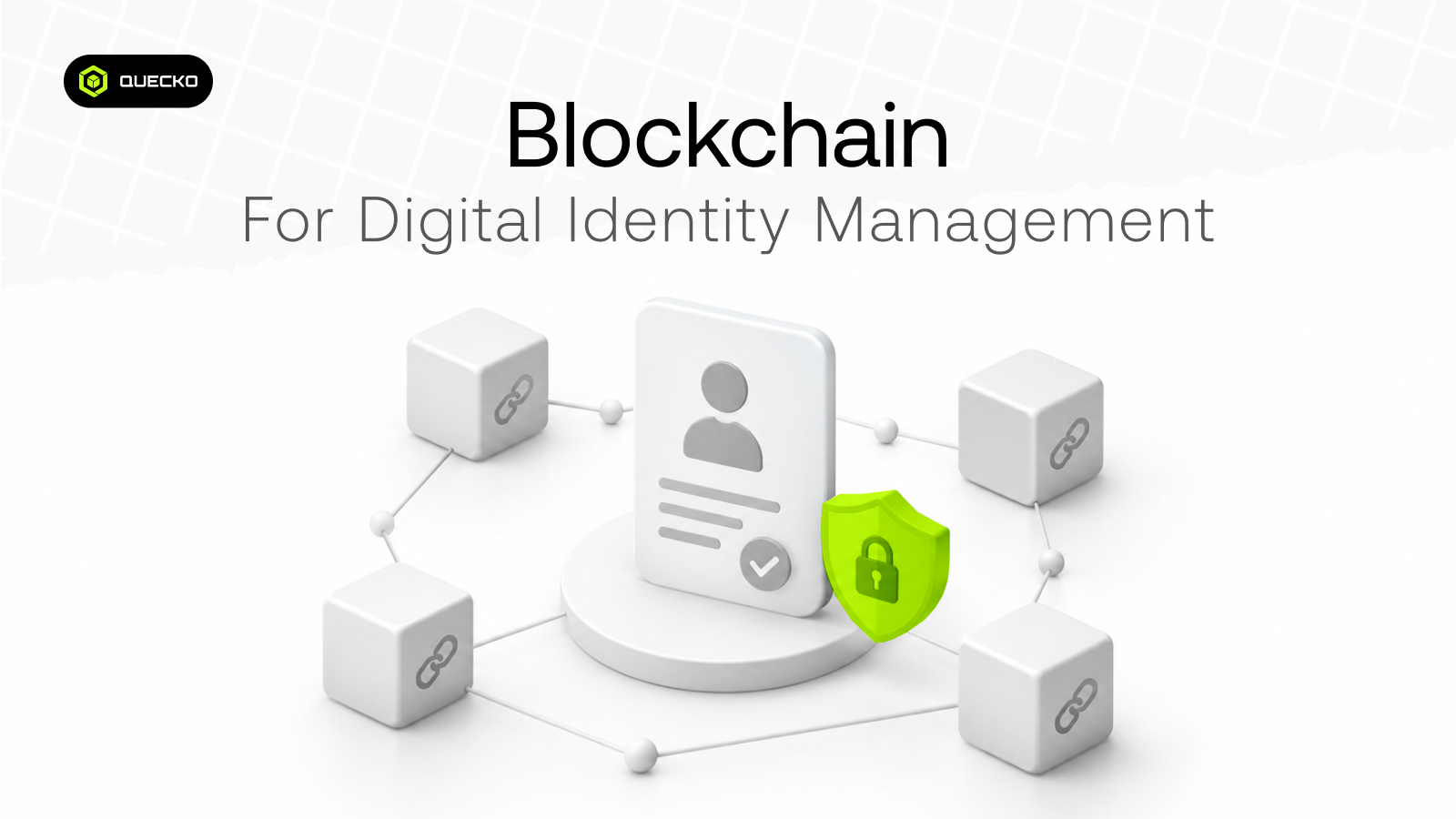
What Is Blockchain for Digital Identity Management?
Blockchain for virtual identity management entails the use of blockchain technology to help the advent, verification, and management of digital identities. A blockchain is an allotted ledger that statistics facts across a network, making recorded transactions difficult to modify without detection.
Unlike traditional identity structures, blockchain identification solutions can guide decentralized identifiers, digitally signed credentials, and secure verification mechanisms without requiring each agency to keep a separate identity database.
A virtual identity platform built round decentralized technology may also comprise decentralized identifiers (DIDs), verifiable credentials, virtual identity wallets, and public-key cryptography. Together, those technologies can assist people control their credentials and proportion relevant data with authorized parties.
For instance, a university could trouble a digitally signed qualification to a scholar. The student may want to save the credential in a virtual identification wallet and give it to a potential business enterprise. The company ought to then affirm the credential’s authenticity without always contacting the university for each verification request.
Organizations seeking to build those abilities generally work with specialised blockchain development services to layout and integrate the technical infrastructure required for decentralized identification structures. This kind of understanding makes certain that the structure is steady, interoperable, and suitable to the corporation’s particular verification desires.
This version can enhance performance, guide credential portability, and decrease repetitive administrative strategies.
Introduction
As a key component of modern life, digital identity allows people and businesses to tap into a variety of services online, validate their identity, complete financial transactions, and secure sensitive information. However, traditional identity management systems often depend on centralized databases that can be vulnerable to hackers, data leaks, and identity fraud.
The development of blockchain technology in the field of digital identity management creates an innovative solution to the challenge of establishing, verifying, and managing digital identities with the use of decentralized technologies, cryptography, and certificates.The development of blockchain technology in the field of digital identity management creates an innovative solution to the challenge of establishing, verifying, and managing digital identities with the use of decentralized technologies, cryptography, and certificates.
Decentralized identity management creates opportunities for introducing more robust processes of identification across a variety of industries. The emerging digital identity management system based on blockchain technology allows the implementation of card portability, removal of intermediaries, and gives users more possibilities for managing their identity. Organizations planning the implementation of such systems usually turn to experienced blockchain service providers that can help develop the infrastructure required for decentralization of identity management processes, like Quecko.
Why Traditional Digital Identity Systems Need Improvement
Traditional identification management often relies upon centralized databases maintained by governments, economic establishments, educational businesses, and private agencies. While these systems continue to be crucial, they present vast demanding situations which have caused organizations to discover greater resilient options. Blockchain identity solutions offer a meaningful course forward by means of permitting decentralized, person-controlled methods to verification and credential management, even though no single solution gets rid of every risk.
A concrete indicator of the problem: The U.S. Federal Trade Commission reported that it received greater than 1.1 million identification-robbery reviews in 2024. These are reviews submitted to the FTC and its companions—now not a reply of all identity-robbery incidents or proof that any unmarried generation might prevent them. The figure illustrates why steady, privacy-aware identification management remains an important issue. Source: Federal Trade Commission, Consumer Sentinel Network Data Book 2024.
1. Centralized Security Risks
When significant amounts of personal data is stored in a single location, a major cyber-attack could expose sensitive information belonging to hundreds of millions of users. Decentralized Identifiers (DIDs) and other blockchain identity solutions solve this issue by distributing identity data across a decentralized network, thereby minimizing dependence on vulnerable entities. Instead of trusting a single entity, DIDs enable identity data to be owned and verified without the involvement of one organization in the management of all the records. While ideally designed systems mitigate the risk of large-scale breaches, they cannot eliminate all loopholes in security.
2. Limited User Control
People usually have little say in what organizations do with their identity records. Decentralized identifiers (DIDs) and self-sovereign identity (SSI) make it possible to create an alternate scenario in which users create their own portable identifiers and manage their own certificates independently of any authority. This solution gives individuals power over how their identification information is used and shared; however, degree of control depends on the features and design of the used technology in the end.
3. Inefficient Verification Processes
Conventional verification procedures usually involve manual checking, 1/3-birthday party verification services, or siloed databases forcing agencies to gather and check the same documents repeatedly. This leads to delays, high administrative costs, and risks of errors or fraud. De-centralized identification systems address such inefficiencies by handing the control of credentials over to users and enabling cryptographic verification that does not require repeated communication with the original provider. Blockchain identity check can speed up these processes even further by making it possible for the businesses to verify cryptographically authenticated credentials more quickly and efficiently, thus eliminating the need for repetitive tasks within each new interaction. The self-sovereign identification system goes even further by enabling users to manage their own verified credentials independently, thus reducing reliance on centralized intermediaries and giving businesses a faster and fairer way to verify.
4. Identity Fraud and Credential Forgery
The issue of false documents and fake identity credentials still continues to dominate the world of online transactions irrespective of industries. To give you an idea of the extent to which the problem of identity theft has been rampantly growing, it is worth noting that according to reports published by U.S. Federal Trade Commission (FTC) in its 2024 Consumer Sentinel Network Data Book, there were more than 1.1 million identity thefts reported in 2024 alone. The answer to this problem may come in the form of decentralized identity, which ties the process of credential issuance and its verification up to the cryptographically verified documents that cannot be processed without being discovered. The concept of blockchain identity verification is an important innovation in this regard, as it allows organizations to check on the signatures of the issuer and authenticity of the certificates in a transparent and verifiable way. Thus, it is likely to become even more difficult for scam artists to forge different documents, commit fraud, or steal fake credentials undetected. However, it should be noted that the effectiveness of this system depends on the reliability of the initial issuer and quality of the verification system.
How Blockchain-Based Digital Identity Management Works
The process of Blockchain identity verification employs a combination of various technologies that work together in order to create, issue and confirm identity records without the use of the regulatory body.
The cornerstone of this technology constitutes Decentralized Identifiers (DIDs). DIDs are unique identifiers that can be created by a user, organization or device and owned by it. Based on the DID method used, whether it is a blockchain or any other decentralized infrastructure, the information can be registered for resolving and verification of these identifiers on compatible platforms.
The trusted organizations make use of that technology and provide verified credentials which are signed digital messages that prove that the person holds particular qualifications, certificates, memberships and other qualities.
In case the person wants to check the credential, he has to verify the crypto evidence and the issuer of the credential to check its validity and whether it has expired or been cancelled.
The users keep these credentials in a digital wallet allowing them to share only the necessary information with authorized services without submitting the entire document.
The very process relies on public key cryptography. The issuer of the credential signs the document with the help of keys.
It is worth noting that blockchain identification verification can verify whether or not a credential is authentic and unaltered, however it cannot independently guarantee the accuracy of the unique facts. Trust in the device in the long run depends on the integrity of the issuing company and the methods used to set up the underlying facts within the first place.
1. Decentralized Identifiers (DIDs)
Decentralized identifiers (DIDs) are identifiers designed to aid verifiable digital identities without requiring a single centralized identification provider. Depending on the DID method, blockchain or any other decentralized infrastructure might also assist submit the records had to resolve an identifier.
DIDs can constitute people, organizations, gadgets, or different entities. Once established, they form the muse of a transportable identification device that users can convey throughout a couple of like minded offerings. Trusted issuers construct on this foundation through attaching verifiable credentials, which might be digitally signed statements representing qualifications, certifications, memberships, or other attributes that a holder can give and a verifier can affirm cryptographically.
2. Verifiable Credentials
Verifiable credentials are digitally signed statements issued by using depended on groups and form a core factor of blockchain virtual identification systems. They can constitute instructional qualifications, professional certifications, club information, or different attributes that people may also need to give across different contexts.
When a verifier needs to verify a credential, they can take a look at its cryptographic proof and applicable company facts to decide whether or not it is actual. Depending on the device, verification can also include checking expiration dates and revocation popularity, without requiring the verifier to touch the unique issuer without delay.
3. Digital Identity Wallets
Digital identity control systems constructed on blockchain rely on virtual identity wallets as a center issue for placing credential management without delay within the fingers of customers. A virtual identity pockets lets in people to store, manage, and present tested credentials with out repeatedly importing whole documents to each carrier they have interaction with.
Rather than sharing an entire record, customers can best the information a selected transaction calls for. For instance, a carrier verifying that a consumer meets an age requirement may want only a simple confirmation, no longer a full date of start or identification file. Privacy-improving strategies can help this kind of selective disclosure while the underlying device is appropriately designed and carried out.
4. Cryptographic Verification
Cryptographic verification sits on the heart of virtual identification control, supplying the technical basis that lets in credentials to be trusted without relying on a government. Issuers signal credentials the use of non-public cryptographic keys, while verifiers use corresponding public keys to confirm those signatures and establish authenticity.
Blockchain infrastructure supports this method by retaining references to public keys, identification information, and credential fame in a manner that is transparent and tough to regulate without detection. When a verifier assesses a credential, they can confirm the issuer’s signature, evaluation expiration details, and decide whether or not the credential has been revoked, all without contacting the unique provider at once. Organizations that have interaction specialised blockchain improvement offerings to construct these systems can make certain that the underlying cryptographic structure is well designed, always maintained, and aligned with the verification necessities in their particular use case.
Key Benefits of Blockchain for Digital Identity Management
The blockchain era offers meaningful advantages for companies seeking more steady, transparent, and efficient strategies to identify control. Understanding those advantages makes it clear why so many groups and institutions are actively exploring decentralized identity answers, and why a properly-designed virtual identification platform can function as a strategic basis for a long-time period of agreement with infrastructure.
Stronger safety through decentralization. Traditional identity systems concentrate sensitive records in centralized databases, developing excessive-fee targets for attackers. Blockchain-based identification infrastructure distributes data throughout a network, lowering reliance on single factors of failure and making unauthorized alterations less complicated to come across through cryptographic verification.
Greater person control and privateness. Decentralized identity models supply people the capacity to manage their personal credentials through digital identity pockets, choosing what information to percentage and with whom. Selective disclosure techniques permit users to give only the precise attributes a service requires, instead of exposing their full personal report.
Faster and more reliable verification. Cryptographically signed verifiable credentials can be shown quickly without requiring companies to touch the unique company for each request. This reduces administrative overhead, shortens verification timelines, and lowers the danger of mistakes delivered with the aid of manual methods.
Reduced identification fraud. Anchoring credential issuance and verification to tamper-obvious data makes it drastically harder for awful actors to provide solid documents or manipulated credentials. While blockchain can not assure the accuracy of facts on the time of issuance, it gives a transparent and auditable path that helps surface inconsistencies.
Improved portability throughout systems. A modern-day virtual identity platform constructed on decentralized ideas is designed to paint across compatible systems, permitting people to hold their credentials from one service to every other without re-filing files or relying on siloed databases. This portability reduces friction for customers and lowers administrative duplication for companies.
Scalable infrastructure through specialized expertise. Realizing these benefits requires thoughtful technical design and integration. Organizations normally paint with specialized blockchain improvement services to build the underlying infrastructure, connect identity systems to existing workflows, and make sure that their digital identity platform meets security, compliance, and value necessities at scale.
Together, those advantages make blockchain a compelling basis for virtual identity control, even though the cost any business enterprise captures will depend on the pleasure of implementation and the trustworthiness of the institutions collaborating in the atmosphere.
Enhanced Security and Fraud Prevention
A nicely-designed virtual identification platform constructed on blockchain infrastructure can use cryptographic verification and tamper-obvious information to make unauthorized credential manipulation significantly harder to execute and less complicated to locate. Because identification records are shipped across a decentralized community instead of stored in a single location, attackers face a more complicated goal than they could with a traditional centralized database.
Greater User Control and Privacy
Decentralized identifiers (DIDs) and broader blockchain identification answers built on decentralized principles can deliver people significant control over how their private information is saved, shared, and offered. Rather than relying on a centralized government to control identification records on their behalf, customers can preserve their own credentials in a digital identity wallet and pick out precisely what records to reveal in any given interaction. Because DIDs allow individuals to create and control their very own identifiers without relying on a vital registry, they form a practical foundation for this sort of user-directed method. The concepts of self-sovereign identity improve this version similarly by way of encouraging structures that place the man or woman, now not the organization, in the center of identity control.
Privacy, however, ought to be dealt with as a layout requirement as opposed to an afterthought. Publishing non-public information immediately on a public blockchain can create long-time period publicity, on the grounds that blockchain information is commonly hard or impossible to take away. Well-designed blockchain identity solutions address this via storing simplest cryptographic references or proofs on-chain, keeping touchy personal information off the ledger completely. Decentralized identifiers support this approach by keeping apart the identifier itself from the non-public information it pertains to, so verification can take location without unnecessarily exposing the underlying records. This structure helps both consumer privacy and regulatory compliance over time.
Faster and More Efficient Verification
Verifiable credentials anchored to Decentralized Identifiers (DIDs) can considerably reduce repeated manual tests through permitting companies to validate digitally signed facts without contacting the original issuer for every request. The self-sovereign identification version strengthens this further by giving individuals portable, person-controlled identifiers that travel with their credentials, enabling verifiers to verify authenticity quickly and reliably throughout unique platforms and services without relying on centralized intermediaries. This can streamline patron onboarding, employee verification, educational admissions, and other identity-dependent procedures, slicing down on administrative delays and reducing the duplication of effort that slows traditional verification workflows.
Interoperability Across Platforms
Decentralized identification will become greater and more sensible when virtual credentials can pass seamlessly throughout unique platforms and offerings. Standards-based blockchain identity solutions, inclusive of those built around W3C decentralized identifiers and verifiable credentials, offer a not unusual technical foundation that lets in customers to offer compatible credentials to specific agencies without having a separate identification account for every one. This interoperability reduces fragmented verification methods, lowers administrative overhead for corporations, and makes virtual credentials truly transportable throughout offerings. Rather than locking identity information within a single platform, properly-designed interoperable systems permit individuals to hold their proven credentials anywhere they are recognized, which is significant to the decentralized identity version. That said, accomplishing meaningful interoperability in practice calls for consistent adoption of shared standards, coordinated governance across corporations, and ongoing technical alignment among special implementations.
Reduced Administrative Costs
Decentralized identification can meaningfully lessen the administrative burden associated with traditional verification workflows. By enabling people to keep and give cryptographically signed credentials without delay, companies can avoid time and again gathering, reviewing, and storing the same files across a couple of interactions. Automated verification procedures supported by way of blockchain identification verification can update guide assessments and decrease reliance on 0.33-celebration offerings, reducing both time and price in line with transaction. That said, the real savings depend on several elements, inclusive of implementation charges, transaction volumes, regulatory necessities, and the complexity of integrating decentralized infrastructure with present systems. Organizations need to weigh those variables cautiously earlier than assuming that reduced administrative costs will materialize fast or uniformly across all use instances.
Industry Applications of Blockchain Digital Identity
Blockchain virtual identification generation and blockchain identification verification are being applied across a developing variety of sectors, each with wonderful necessities and regulatory considerations.
Financial offerings: Banks and fintech businesses can use verifiable credentials and blockchain identification verification to assist consumer onboarding, commercial enterprise verification, and compliance workflows. A digital identification wallet permits clients to keep validated credentials and present them securely in the course of onboarding, lowering the want for repeated record submission. Blockchain does not update know-your-patron (KYC) responsibilities, but it is able to help make compliant verification techniques more efficient and decrease the executive burden of repeated document collection.
Healthcare: Digital credentials can assist affirm expert qualifications and assist managers get right of entry to healthcare-related records. Blockchain identity verification lets establishments affirm that practitioners maintain present day, legitimate credentials without relying on guide exams or centralized registries. Sensitive clinical records have to remain included via suitable access controls and stable garage.
Education: Universities and education carriers can issue tamper-obtrusive virtual diplomas, certificates, and professional qualifications. Graduates can keep these credentials in virtual identification pockets and share them at once with potential employers, who can then use blockchain identification verification to confirm authenticity quickly, lowering reliance on sluggish, guide procedures and making it harder for candidates to give cast documents.
Government offerings: Public establishments can discover virtual identity platforms for licensing, benefits administration, and different citizen-dealing with offerings. A virtual identity wallet can supply residents a steady, transportable manner to provide confirmed documents when getting access to eligible offerings. Blockchain identification verification can guide extra regular and auditable affirmation of eligibility, issue to applicable prison necessities and accessibility needs.
E-commerce and virtual structures: Businesses can use blockchain identity verification to establish consideration with customers, reduce certain sorts of fraud, and guide age or eligibility checks which are legally required. When users deliver verified credentials in a virtual identification wallet, platforms can verify relevant attributes without always collecting and storing greater non-public records than necessary.
Challenges in Implementing Blockchain Identity Solutions
Despite their ability, blockchain identification answers require cautious planning throughout several interconnected regions.
Regulatory compliance: Identity structures need to account for privacy regulation, statistics protection obligations, and quarter-unique necessities. Organizations have to investigate how decentralized systems interact with guidelines governing non-public data, consent, retention, and deletion. This includes understanding how verifiable credentials are healthy within present legal frameworks for diagnosed proof of identification or qualification.
Privacy and information safety: Sensitive private records have to commonly stay off-chain, with suitable encryption, get admission to controls, and data minimization. Even identifiers and transaction metadata can create privacy dangers. When verifiable credentials are designed to share simplest the minimum vital records, they are able to assist stronger privacy consequences, but this calls for planned architectural picks from the outset.
Interoperability: Different blockchain networks, credential formats, and identity providers won’t paint together automatically. Verifiable credentials rely on shared requirements consisting of those evolved via the W3C to characteristic across exclusive structures, and companies must examine whether their selected infrastructure supports the ones standards before committing to a specific approach. Adopting relevant specs and testing compatibility across environments are important steps.
Users revel in: Managing private keys and digital identity wallets can be difficult for nontechnical customers. Recovery mechanisms, available interfaces, and clean consent flows are critical for adoption. If users can’t reliably get entry to or give their verifiable credentials whilst wished, the sensible price of the machine diminishes regardless of its technical soundness.
Governance and consider: Businesses need to decide which corporations can issue credentials, how compromised credentials are revoked, and the way disputes are handled. A blockchain can keep facts and guide auditability, but it can’t independently set up whether or not a credential company merits agreement. Governance frameworks that define provider eligibility, revocation methods, and accountability mechanisms are just as critical as the underlying generation.
Addressing these demanding situations calls for sustained collaboration among developers, companies, regulators, and identification carriers throughout layout, deployment, and ongoing operation.
How Quecko Supports Blockchain-Based Digital Identity Development
Quecko, a blockchain-based totally improvement and advertising agency, facilitates businesses to explore and put in force blockchain digital identification solutions aligned with their operational dreams and compliance requirements.
For groups considering decentralized identification, Quecko can assist the planning and development of blockchain virtual identity systems, depending on venture scope and technical necessities.
Potential regions of labor consist of:
Blockchain structure: Designing identification-associated infrastructure around suitable blockchain networks, decentralized identifiers, and credential requirements suitable to the agency’s verification desires.
Smart agreement improvement: Building and checking out contracts for identification-associated registries, permissions, or credential-popularity mechanisms wherein on-chain components are suitable.
Digital identity platform development: Supporting the development of systems that combine identity credentials, verification mechanisms, and enterprise applications into a cohesive and scalable system.
Digital wallet integration: Supporting wallet-based reports that allow users to manage and present verifiable credentials throughout well suited services.
Security-centered development: Incorporating secure key management, get right of entry to controls, testing, and privateness-aware design all through the development method.
Blockchain development services: Helping businesses examine technical necessities, integration options, scalability, and implementation priorities before improvement starts off.
By combining blockchain development understanding with a sensible know-how of virtual merchandise and business targets, Quecko can help corporations examine opportunities for stable, scalable blockchain virtual identity infrastructure that relies on verification throughout industries.
The Future of Blockchain for Digital Identity Management
The destiny of blockchain virtual identification is in all likelihood to involve more adoption of verifiable credentials, decentralized identifiers, interoperable virtual wallets, and privateness-improving cryptographic technologies. Zero-knowledge proofs, as an instance, can allow a consumer to illustrate that a selected announcement is proper without revealing all of the underlying records. When accurately implemented, these techniques might also help privateness-preserving eligibility exams and different identity verification strategies that align with the middle ideas of decentralized identity. As virtual services enlarge across borders and structures, companies will more and more want identity systems that are steady, consumer-pleasant, and compatible with evolving standards.
Blockchain virtual identification might also play a crucial position on this transition, in particular where a couple of events want to affirm credentials without relying on a single shared database. However, successful adoption calls for greater than choosing a blockchain network. Organizations must bear in mind technical structure, governance, consumer revel in, privateness, and regulatory compliance to decide whether or not a blockchain-primarily based technique is appropriate for their needs.
Conclusion
Blockchain for virtual identification control gives a promising manner to improve credential verification, lessen administrative friction, and provide people more control over their digital identities. Through decentralized identifiers, verifiable credentials, digital identification wallets, and cryptographic verification, agencies can build identification solutions that aid trust throughout digital offerings.
Although blockchain isn’t always an entire substitute for existing identity structures, it can offer precious infrastructure while implemented with appropriate security, privacy protections, and governance.
Quecko, a blockchain-primarily based improvement and advertising and marketing organisation, can assist businesses explore blockchain improvement offerings and examine answers tailor-made to their virtual identity requirements.
Ready to explore blockchain-powered virtual identity answers for your enterprise? Get in contact with Quecko to talk about your blockchain improvement requirements.
Frequently Asked Questions (FAQs)
1. What is blockchain for digital identity management?
Blockchain for virtual identification management makes use of decentralized infrastructure and cryptographic techniques to guide the creation, verification, and management of digital identities. Unlike traditional identification structures that rely upon centralized databases maintained with the aid of a single authority, blockchain identification answers are distributed across a community, making recorded identity data considerably more difficult to alter or compromise without detection.
2. How does blockchain improve digital identity security?
Blockchain identity answers cope with several of the center vulnerabilities discovered in traditional identity structures by way of combining tamper-obvious statistics, cryptographic verification, and decentralized infrastructure. Rather than storing sensitive personal information in a single region that offers an attractive goal for attackers, those solutions distribute identity information throughout a community where unauthorized alterations are appreciably less complicated to discover.
3. What is a digital identity wallet?
A digital identity pockets is an application that permits users to shop, manage, and present identity credentials to services whilst wanted. It is a core aspect of the self-sovereign identity model, which holds that individuals have to be capable of controlling their personal virtual credentials without relying on a centralized authority to vouch for them at each interaction.
4. What are decentralized identifiers (DIDs)?
Decentralized identifiers (DIDs) are precise identifiers that people, organizations, and gadgets can create, own, and manipulate without relying on a centralized identity provider. They shape a foundational building block of decentralized identity, and greater in particular of self-sovereign identity (SSI), a model that offers people direct authority over their very own virtual identities in preference to delegating that management to a central authority employer, agency, or other 1/3 birthday celebration.
5. What are verifiable credentials?
Verifiable credentials are digitally signed statements issued by organizations, consisting of universities, licensing our bodies, or government corporations. They can represent instructional qualifications, expert certifications, club statistics, or different attributes that a verifier can authenticate the use of cryptographic evidence.
Decentralized identification systems rely closely on verifiable credentials as the primary mechanism for sharing relies on facts without relying on a central authority.
- What is self-sovereign identity?
Self-sovereign identity (SSI) is a technique to digital identity that locates control of private statistics and credentials without delay in the arms of the character. Rather than counting on a centralized authority to keep and vouch for identification statistics, SSI permits users to keep their personal established credentials in digital identification pockets and give them selectively to legal parties as wished.
7. Which industries can benefit from blockchain identity solutions?
Blockchain identification solutions have realistic applications across a wide range of industries, each with its personal verification challenges and regulatory requirements. These include monetary services, healthcare, education, government services, e-trade and digital platforms, and delivery chain and logistics.
8. What challenges affect blockchain identity adoption?
Adopting blockchain virtual identification systems includes navigating a number of interconnected challenges that groups have to address thoughtfully for the duration of making plans and layout.
9. How can Quecko help businesses develop a digital identity platform?
Quecko can support agencies exploring digital identity control solutions constructed in the blockchain era through a range of services tailor-made to venture scope and requirements. Whether an agency is inside the early levels of evaluating decentralized identification infrastructure or equipped to move into active development, Quecko can assist with technical planning, blockchain structure layout, clever contract development, digital identification pockets integration, and platform integration.
10. Is blockchain digital identity suitable for every business?
Blockchain virtual identity isn’t a conventional suit for each employer. It tends to supply the most fee in environments wherein more than one event wants to confirm credentials independently, in which customers require identity portability throughout systems, or in which existing verification techniques are gradual, steeply-priced, and vulnerable to mistakes. Industries which include economic services, healthcare, and education frequently give strong use cases because of the quantity and sensitivity of credentials concerned.
Smaller companies with trustworthy, unmarried-party verification needs may additionally find that current identity gear are sufficient.
Author

Sheeba Abbasi
Digital Marketer and Social Media StrategistHi! I'm Sheeba Abbasi, a Digital Marketer, Social Media Strategist, and Content Creator specializing in Web 3.0 and Blockchain, with expertise in content development, community engagement, strategic planning, and technical writing.

Date
14 days agoShare on

Related Blogs

Beyond Endorsements: Why Equity-First Models Are Redefining the Player-Owned Economy
5 days ago
Modular Blockchains Are Killing Monolithic Chains — Here’s Why Rollup Stacks Are Winning in 2026
7 days ago
USDT vs USDC: Which Stablecoin Is Better for Enterprise Digital Infrastructure in 2026?
11 days ago
How Businesses Use Stablecoins for International Transfers
14 days ago