Best Blockchain Gaming Ecosystems
Blockchain technology is changing not only how people buy and sell digital assets, but also how the gaming industry works. From item ownership and digital collectibles to community-driven economies and virtual worlds, blockchain could revolutionize many aspects of gameplay. With blockchain gaming still at its early stages, one would expect to see multiple blockchain platforms […]
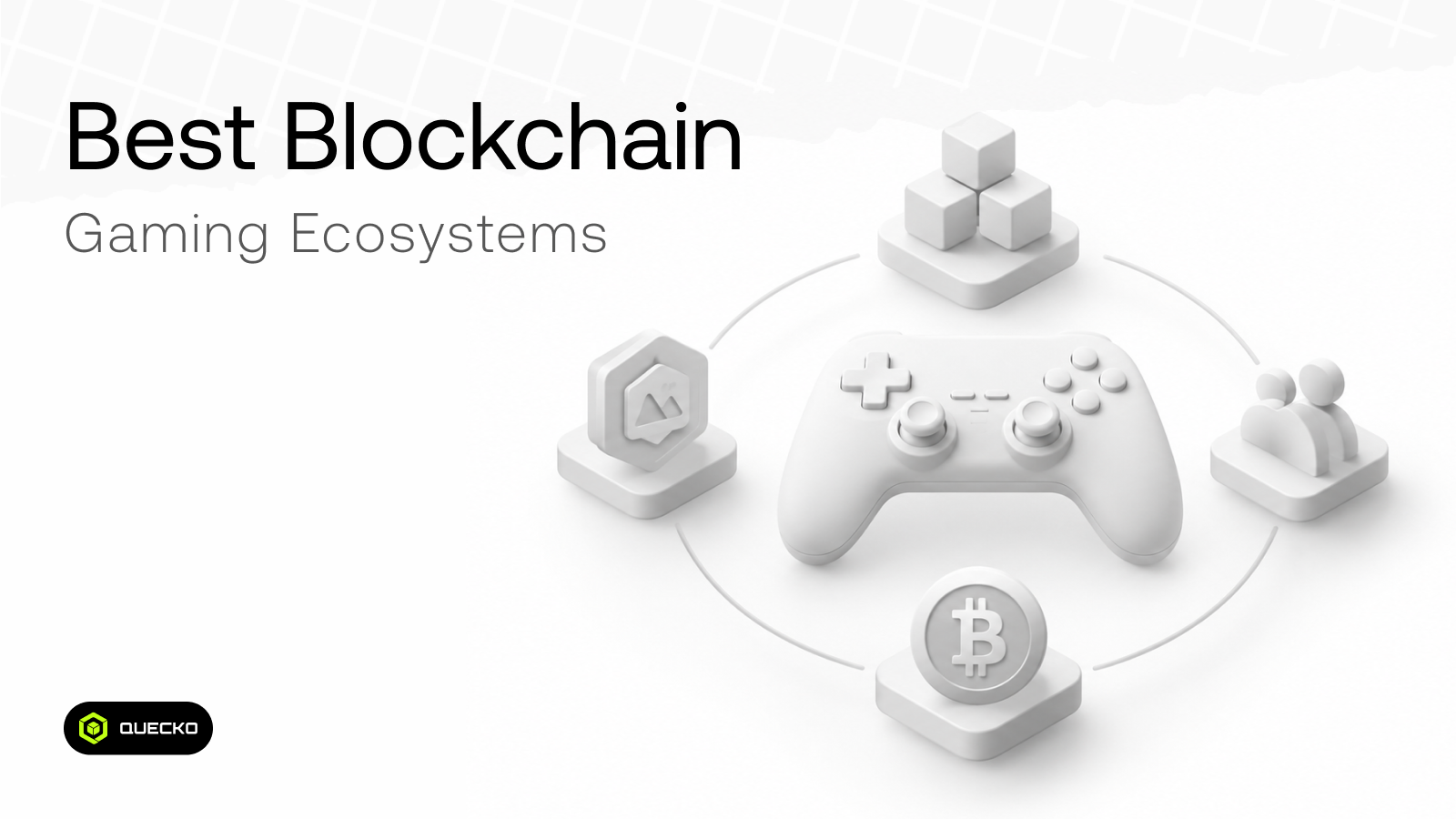
Blockchain technology is changing not only how people buy and sell digital assets, but also how the gaming industry works. From item ownership and digital collectibles to community-driven economies and virtual worlds, blockchain could revolutionize many aspects of gameplay.
With blockchain gaming still at its early stages, one would expect to see multiple blockchain platforms popping up to offer the underlying support to these applications. These platforms essentially enable developers to create blockchain games, market them online, and scale them, alongside forming communities where players can interact with digital assets together.
However, considering there are many Web3 gaming platforms to choose from, where would one start?
What Is a Blockchain Gaming Ecosystem?
A blockchain gaming space is not limited to a blockchain platform that merely runs a game. It may consist of games, developers, players, marketplaces, digital assets, wallets, tokens, and supporting facilities interworking together.
Conventionally, gamers get stuck playing the same game without ever being able to take their progress to another game or a different platform. Blockchain games, on the other hand, can allow some digital assets to be stored in blockchain records and consequently, such assets could be transferred or traded through compatible systems.
This creates new possibilities for asset ownership, player economies, and Web3 gaming communities.
A blockchain gaming space is not limited to a blockchain technology that runs a game. It may consist of games, developers, players, marketplaces, digital assets, wallets, tokens, and supporting facilities interworking together.
Conventionally, gamers get stuck playing the same game without ever being able to take their progress to another game or a different platform. Blockchain games, on the other hand, can allow some digital assets to be stored in blockchain records and consequently, such assets could be transferred or traded through compatible systems.
1. Immutable
Immutable has become a leading force in the Web3 gaming domain by concentrating on gaming infrastructure.
Unlike most blockchains, which are primarily designed to serve various uses, Immutable delivers tools and infrastructure exclusively to game developers. With an ecosystem that covers not only gaming but digital assets, marketplaces, and blockchain-based ownership, it enables creators to bring the gaming world to players.
Immutable has always regarded user interaction improvement as one of the significant aspects. Even though blockchain is not only about transparency or decentralization but also about complexity, which might discourage people who are new to the world of blockchain, reducing the difficulty level of handling wallets, making transactions, and managing digital assets will play a big role in bringing blockchain gaming to the mainstream.
Studios interested in acquiring Web3-based game development infrastructure can consider Immutable as one of the ecosystems to watch.
2. Ronin
The network was designed with gaming in mind, and the game Axie Infinity played a pivotal role in introducing it to the world through its immense popularity.
Ronin targets real-life requirements of blockchain game developers such as low-cost and fast transactions. As a result of that strategy, it has managed to attract not just a huge gamer base but also several game developers around the network.
Ronin has been successful primarily because of its game-first mindset. Rather than simply developing blockchain-enabled games as applications, Ronin has created its ecosystem around game-related activities and the player communities that are formed.
The widespread appeal of Axie Infinity was indeed one way to demonstrate that a blockchain game can create a strong community over gameplay, a set of digital goods, and a game-based economy.
Furthermore, since the game’s launch, its fan base continues to support it, which is another way to say that mature games can still play an important role in shaping broader blockchain gaming communities.
3. Polygon
Polygon has become an important part of the wider Web3 gaming landscape.
Its Ethereum compatibility and relatively efficient transactions have made it attractive to developers exploring blockchain-based games. The ecosystem also gives developers access to Ethereum’s well-established tools and infrastructure.
For game developers, this means that incorporating and creating blockchain functionality will become faster and easier, especially when the team members have prior experience with Ethereum technology.
Through the Polygon Web3 ecosystem, game developers can also connect to various components like wallets, marketplaces, developers, and other blockchain applications in a broader sense.
4. Avalanche
Avalanche takes a flexible approach to blockchain gaming. The platform’s infrastructure enables developers to build their own blockchain environments that align closely with the requirements of their particular app.
This facility is handy for game studios wishing to control their blockchain environment, transaction environment, and the in-game economy.
If a game is complex for a blockchain, a game environment customized to specific needs allows for a great freedom of expression for the developers.
Some developers may also be considering tools like Chainlink VRF if the game needs randomness verification for something like rewards, loot box drops, or other game progression events.
5. Arbitrum
Arbitrum is an Ethereum Layer 2 network that has attracted projects across the Web3 sector, including gaming applications.
Gaming can involve frequent interactions with blockchain infrastructure, so transaction efficiency is an important consideration. Arbitrum’s connection to Ethereum also gives developers access to a mature ecosystem of tools and applications.
For teams already building with Ethereum, an Ethereum-compatible Layer 2 can provide another route for developing and scaling blockchain games.
6. The Sandbox
The Sandbox is an example of a blockchain game that differentiates itself from other game sectors. In place of concentrating on traditional game features, the platform brings gaming and user-generated contents together as well as virtual worlds. Through this approach, The Sandbox empowers both Players and creators by letting them contribute or construct digital experiences, which gives rise to a sort of community-driven platform.
The game model illustrates one of the major concepts behind Web3 game development: users are not just mere consumers. They can also be content creators, collectors, or community facilitators of a virtual economy through different activities.
The idea further manifests in Sandbox Multiverse as interconnected experiences and user-generated worlds can together become part of a large-scale gaming environment.
7. Treasure
Treasure focuses on building connections between games, players, communities, and digital assets.
The concept of an interconnected gaming ecosystem is important because Web3 gaming has long explored the possibility of moving beyond isolated games. Shared infrastructure and communities can potentially create stronger relationships between different gaming experiences.
Treasure’s approach therefore reflects the wider industry movement toward interconnected Web3 gaming ecosystems.
What Makes the Best Blockchain Gaming Ecosystems?
Choosing a blockchain gaming ecosystem isn’t simply about looking at which network has the most projects. Several factors can determine whether an ecosystem is genuinely useful for players and developers.
1. Game Quality
The games themselves remain the foundation. There would be better chances for players to continue engaging if the features of blockchain go hand-in-hand with fun gameplay instead of being the primary motive for playing.
An ideal blockchain game should be a game that has blockchain technology to offer some useful aspects to it. Good Web3 mechanics could help in making things easier for the users of blockchain games.
2. Scalability
Massively popular games are able to attract very large numbers of players at the same time. That’s why gaming networks require backend architectures strong enough to support the processing of a million operations/sec, while avoiding latency and the degradation of performance as a consequence of the high data rate.
3. Low Transaction Costs
Blockchain transaction fees can add up quickly if you’re transacting frequently.
4. Developer Tools
Strong development tools, documentation, APIs, and technical support can make it easier for studios and game publishers to build and maintain blockchain games.
5. User Experience
Blockchain games are an exciting prospect, but they can’t remain a niche solely for crypto individuals. With smooth onboarding and clear asset management, blockchain gaming will be able to hook even the biggest non-crypto users, who might then become a regular part of the ecosystem.
Moreover, a seamless onboarding journey is likely to be one of the main reasons that gamers keep coming to the blockchain gaming platform. This way, they will get a feeling of being part of a large and interconnected gaming community.
On the other hand, technologies like session keys are another factor in the successful execution of blockchain gaming. They can help minimize the friction of repeating operations by giving players an idea of interacting with the game’s system smoothly without the feeling of being involved in the blockchain.
6. Community
A successful gaming ecosystem needs an active community of players, developers, creators, and fans. Community engagement can contribute to the long-term growth of both individual games and the wider ecosystem.
Why Blockchain Gaming Ecosystems Matter
Blockchain gaming is one very significant innovation in the concept of digital ownership.
When it comes to video games where a player uses real resources such as their time or money to purchase digital items, the controlling publisher of the title keeps hold of all the characters and items. Blockchain technology changes this model. It allows players to have more ownership of virtual items with the help of blockchain.
This can generate innovative ideas for blockchain games when it comes to how players handle and engage with certain assets inside the game.
It’s worth noting that not all blockchain games necessarily offer genuine ownership or interoperability. Those features are determined based on how each game or platform is created and what it focuses on.
The blockchain technology gives game developers a host of new opportunities to build digital economies and communities.
Blockchain gaming can also go hand in hand with the other technological innovations of Web3, such as decentralized finance. Blockchain developers, through the use of these technologies like DeFi, can try out fresh methods of in-game economies and handling digital assets. Account abstraction is another aspect of blockchain that will make game transactions much easier for players and wallets. Meanwhile, cryptocurrencies are great when they are used as various forms of incentives, payment, and trade within the game environment. These are just a few of the tools that can be used in the game without blockchain being essential for every game. However, it is the developers’ choice of which technologies they will rely on the most through which they will offer to the players and themselves enjoyable and easy-to-access experiences.
Quecko and Blockchain Gaming
Quecko helps connect gaming with Web3 infrastructure while keeping the player experience simple. Its approach focuses on integrating blockchain features without taking attention away from the game itself.
Successful blockchain games still need gameplay loops, solid game mechanics, and reasons for players to keep coming back.
There will likely be various reasons why Players play, progress, compete, and explore. It is not just about collecting tokens. Security infrastructure is very important as well. For example, Player information, like an IP Address, should be handled safely.
Quecko’s approach also supports sustainable digital economies, where rewards, assets, and marketplaces are designed to add value to the overall gaming experience.
Conclusion
Blockchain gaming has taken a big step forward, and it is no longer solely about NFTs and tokens. Now game developers are working towards better gameplay, easier access, digital ownership, and stronger player communities. Those top gaming ecosystems that take advantage of blockchain only up to a point where it actually offers value and doesn’t make everything complicated will likely dominate the market.
While the blockchain industry keeps growing, the attention will gradually get redirected to developing games people really want to play. What the future of blockchain-based gaming is depends more or less on how well developers succeed in leveraging the technology to improve the player experience rather than let the technology itself be the main attraction. If blockchain game-makers manage to find the right mix between the two, the sector might even become a regular feature within the broader gaming world.
FAQs
- What is a blockchain gaming ecosystem?
It is a network of games, developers, players, digital assets, marketplaces, and blockchain infrastructure working together. - Which are the leading blockchain gaming ecosystems?
Popular ecosystems include Immutable, Ronin, Polygon, Avalanche, Arbitrum, The Sandbox, and Treasure. - Why is blockchain used in gaming?
Blockchain technology enables users to take ownership, swap their assets, establish their own micro-economies as players, and even find new methods for the community to be engaged with the game.
Author

Khola Abbasi
Blockchain & Crypto Marketing SpecialistA writer with a focus on DeFi and smart contracts. I simplify technical topics through clear, engaging content. Sharing ideas, insights, and what I'm learning.
Date
1 month agoShare on

Related Blogs
Beyond Endorsements: Why Equity-First Models Are Redefining the Player-Owned Economy
5 days ago
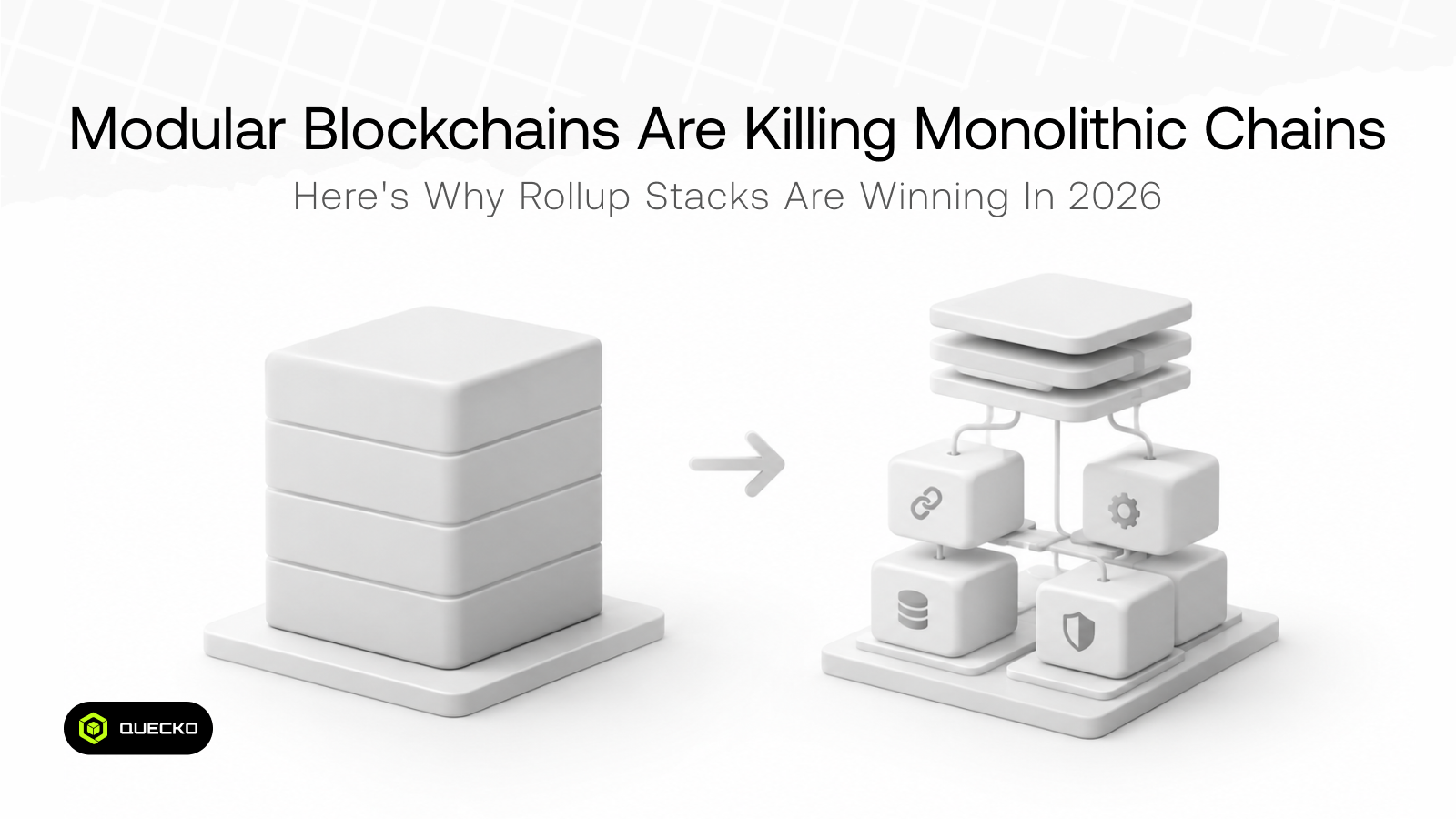
Modular Blockchains Are Killing Monolithic Chains — Here’s Why Rollup Stacks Are Winning in 2026
7 days ago
USDT vs USDC: Which Stablecoin Is Better for Enterprise Digital Infrastructure in 2026?
11 days ago
How Businesses Use Stablecoins for International Transfers
14 days ago