AI + Blockchain: The Future of Autonomous Finance
Explore how AI and blockchain are shaping autonomous finance, enabling smarter vendors, more secure transactions, smarter contracts, and decentralized monetary systems.
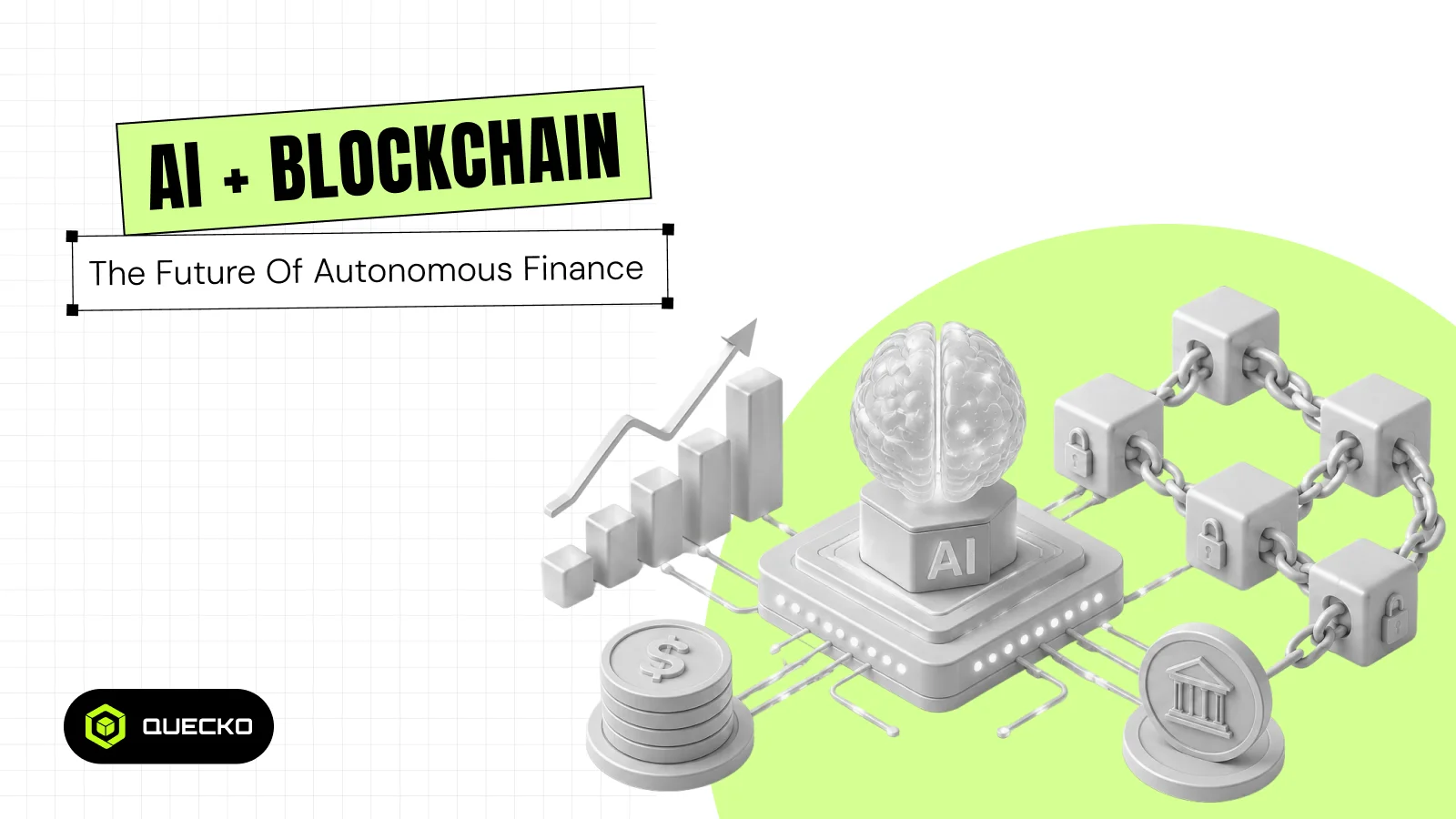
Finance is entering a new technology, one where software can analyze markets, make choices, execute transactions, and continuously optimize money strategies with minimal human intervention. Influential technologies in this transformation include: synthetic intelligence (AI) and blockchain.
Separately, AI and blockchain are already transforming industries. Together, they have the potential to create a new money model: self-sustaining finance. In this model, AI vendors and software vendors can display market conditions, compare probabilities, and implement monetary movements based on predetermined goals and facts in real time.
Autonomous Finance combines AI’s ability to analyze data and make intelligent decisions with blockchain’s ability to provide transparent, programmable, and verifiable execution Blockchain Rails can provide the infrastructure necessary for these automated transactions, while the DeFi protocol provides open markets where AI and financial power travel
One emerging area is agent payments, where AI-powered marketers can stimulate and complete invoices for consumers or businesses. Concepts, such as HTTP 402, historically associated with the “demanding payment” status code, are gaining renewed interest as a capability base for gadget-to-gadget payment flow. This allows an automated software application to request, authorise, and process payments without the need for human intervention.
Blockchain can create a verifiable audit trail for every transaction that Rails makes, making it easier for companies to track decisions, transfers, and interactions between AI structures and financial packages. This combination of smart decision-making and clear execution should make self-sustaining livelihood efficient infrastructure.
For a blockchain development and ad retail company like Quecko, the AI-blockchain intersection represents a critical opportunity to help Web3 companies circulate from experimental theory to smarter, scalable solutions. Combining AI agents, software vendors, agency payments, blockchain smart contracts, execution protocols, and more files programmed and can help businesses explore more efficient financial systems.
What Is Autonomous Finance?
Self-financing refers to monetary systems that fulfil responsibilities with limited human participation. Instead of needing a human to test markets, approve transactions, rebalance portfolios, or manipulate liquidity, a smart software program can play these games according to predetermined goals and risk criteria. A growing number of AI marketers and software vendors are capable of restructuring these programs’ autonomy in complex economic environments.
Artificial intelligence makes sense at the back of these structures. It can organise massive data sets, capture patterns, predict capacity impacts, and make recommendations or decisions. Additional best-in-class applications will allow AI vendors to interact directly with financial protocols, coordinate with other vendors, and foster agent-to-agent transactions primarily based on predetermined preferences.
Blockchain provides the infrastructure for execution. Smart contracts can robotically execute transactions in stage with application rules, as decentralized networks offer transparent records and verifiable audit trails of lil this mix can also help trustee wallets, autonomous software to maintain digital assets, engage with protocols, and respect each person’s transaction movement.
Another significant improvement is proxy payments, where AI-powered structures can incentivize, authorize, and calculate entire invoices based on precise conditions or goals, when mixed with programmable funds to enable those systems to mechanically transfer funds when predetermined rules are met; for example, according to real local market pay in Providers terms.
The result is an economic environment where AI makes decisions, verifies the blockchain, and executes smarter contracts. Rather than automating individual financial processes, autonomous finance creates systems where software vendors can continuously analyze records, coordinate games, and execute economic techniques.
Recent research on automated AI agents in decentralized finance highlights applications in buying and selling, governance, invoicing, and various DeFi games as well as identifying demanding situations of transparency, alignment, security, and decentralization as AI vendors become more efficient. Offers are designed, managed and executed.
How AI and Blockchain Work Together
The real payoff of AI + blockchain comes from the combination of those capabilities.
AI is remarkable for coping with complexity. It can analyse market transactions, a person’s behavior, transaction information, and various records much faster than traditional routing methods.
Blockchain, meanwhile, is designed to accept and verify authenticity. Once transactions are recorded on the chain, members can independently verify what happened. Smart devices can influence economic policies without the need for real intermediaries.
Consider the self-sustaining DeFi portfolio. AI agents should monitor market conditions and take the opportunity to rebalance assets. The transaction must then be submitted to smart settlement, which executes the recognized method in line with predefined thresholds.
This creates a capability workflow:
Data → AI Assessment → Decision → Smart Contract → Blockchain Execution
Such systems should make the monetary supply faster, automated and accessible to a growing number.
Main uses of independent finance:
1. AI-Driven DeFi
Decentralized finance is one of the most obvious areas for AI integration. AI traders undoubtedly need to shed light on credit markets, compare liquidity positions, be aware of arbitrage opportunities, or optimize yield techniques .
Instead of customers manually interacting with two protocols, self-sufficient salespeople must manage a specific game based entirely on personalized language .
2. Smart Business
AI can systemize market data and discover patterns that can be difficult for humans to crack at scale. When it comes to blockchain-first based business structures, AI-powered systems will undoubtedly want to execute strategies mechanically.
However, even a self-sustaining industry will increase the importance of risk control, monitoring, compliance and security.
3. Automated Property Management
AI could help buyers handle different digital asset portfolios by analyzing threats, market conditions, and predetermined financing preferences.
Smart contracts can provide performance scores so that portfolio guidelines can be applied in a transparent and consistent manner.
4. AI-powered smart contracts
Traditional smart contracts implement predefined terms. Subsequent development could include intelligent systems that interpret external facts and suggest moves before smart contracts are executed.
This doesn’t mean that independent AI directly puts financial content on top of things. Instead, robust architectures can integrate AI selection design with default permissions, limits, authentication mechanisms, and human oversight.
5. Real Property Finance
Blockchain is increasingly used to symbolize real international assets digitally. AI seeks to complement this infrastructure through automated contingency assessment, tracking, compliance workflows, and portfolio monitoring.
For groups exploring tokenized assets, the mix should create a smart financial infrastructure.
Why Security and Governance Matters
The real value of AI + blockchain comes from the combination of those capabilities.
AI is good at handling complexity. With gadget recognition, it can analyze market transactions, consumer behavior, transaction information, and other records much faster than traditional manual processes. This makes AI agents increasingly useful for applications that require nonstop monitoring, analysis, and selection.
Blockchain, meanwhile, is meant for deliberation and verification. Once transactions are recorded on the chain, members can independently verify what happened. Smart contracts can implement economic rules without the need for real intermediaries.
Consider a standalone DeFi portfolio. A.I. It could then set up the transactions in a smart agreement that executes the permitted method in line with predefined thresholds. With agent wallets, these AI-powered structures can interact with blockchain operations even while operating within specific permissions and cost constraints.
This creates a possible workflow:
Data → Machine Learning → AI Analytics → Decisions → Dealer Money → Smart Contracts → Blockchain Execution
Such structures may want to make financial services faster, more automated and available in increasing numbers.
Key Applications of Autonomous Finance
1. AI-Powered DeFi
Decentralized finance is one of the most immediate areas for AI integration. AI traders will undoubtedly have to explore credit markets, study liquidity conditions, be aware of arbitrage opportunities, or adapt yield strategies across protocols such as complete decentralized exchanges.
Customers want to manage positive play based on user-defined goals of self-sufficient traders instead of manually interacting with two protocols. This can support computerized crypto payments, portfolio monitoring, and liquidity operations.
2. Smart Business
AI can methodize market data and identify styles that can be difficult for people to beat at scale. When connected to blockchain-first based buying and selling infrastructure and decentralized exchanges, AI-powered systems should ideally perform the technique mechanically .
The emergence of proxy payments could take this concept further. Instead of users having to initiate each transaction manually, AI agents would potentially decide when a payment is needed and execute it through the approved blockchain infrastructure.
But a self-sufficient company also increases the importance of risk monitoring, inspections, tracking and security.
3. Automated Property Management
Smart contracts can provide execution steps that allow portfolio rules to be implemented in a transparent and automated way. Agent wallets should act as managed transaction interfaces, without granting unlimited rights to access independent systems without exact assets or features.
Developers can also use systems, such as the Coinbase Developer Platform, to discover the infrastructure for building blockchain applications, wallet functionality, crypto payments, and experience.
4. AI-powered smart contracts
Traditional smart contracts implement predefined conditions. Subsequent development should include smart systems that interpret external files and smart contracts that advocate for moves before they are executed.
This does not suggest putting independent AI in control of economic materials without delay. Instead, robust architectures can integrate AI selection design with default permissions, transaction limits, authentication mechanisms, and human oversight.
For example, an AI agent needs to examine the market information on the use of smart devices for knowledge acquisition, propose an alternative, submit the recommendation for intelligent settlement, and then verify whether the offer falls within the predefined policies or not before performing it under contract.
5. Real Property Finance
Blockchain is increasingly used to symbolize real assets digitally. A.I.
AI could potentially allow vendors to continuously monitor tokenized content, while smart contracts would provide clear execution and agreement. For organizations exploring tokenized assets, the mix can create a smart economic infrastructure.
Why Security and Governance Matter
Independent finance also handles extremely demanding situations.
AI models can make inaccurate predictions. An autonomous agent can behave in a stochastic manner. Smart devices can include vulnerabilities. Financial decisions made using opaque structures can be difficult to explain.
Therefore, the fate of AI-powered finance cannot be about increasing automation. It should be recognised for its protection, transparency, governance and accountability.
A solid structure should define what an AI agent can and cannot do, how transactions are performed, and the need for human intervention.
Agent wallets must operate with realistically declared permissions, spending limits, and codes of conduct. Similarly, proxy bills seek safeguards that prevent autonomous systems from engaging in illegal or asymmetric behaviour.
For blockchain companies, those concerns should be part of product enhancements from the start instead of being added after launch. The goal is to build DeFi applications, decentralized exchanges, automated crypto payments, or AI-powered financial products, combining system learning, blockchain infrastructure, smart contracts, and managed AI agents to also maintain the security and transparency that decentralized systems require to create.
How Quecko Can Help Build the Future
Here, Quecko can make space within the emerging self-sufficiency-finance ecosystem and within the destiny of the broader agent of economic proposal.
Quecko describes itself as a Web3 improvement ad organization and provides blockchain engineering, DeFi improvement, smart contracts, AI development, automation, consulting, and Web3 development services His expertise can help emerging ideas with Lights Out Finance, where self-sustaining systems advance financial technology revenue
Its AI capabilities include AI vendors and co-pilots, predictive analytics, automation, statistical engineering, MLOps, and AI governance. Its blockchain services include the DeFi structure, smarter contracts, layer 1 and layer 2 development, wallets, exchanges, and real asset tokenization.
This kit is especially relevant for companies building standalone money products and exploring dealer financing, where A.I. Instead of treating AI and blockchain as separate technologies, organizations can come up with architectures where intelligence, decentralized infrastructure, and automated execution charts coexist.
For developers building those systems, systems with the Coinbase Developer Platform provide the infrastructure to grow and integrate blockchain-based complete applications, while simultaneously verifiable credentials can help verify trustworthy data about customers, businesses, or sustainable vendors; self-selling blockchain-based will translate multiple records, transactions, credentials, different authentication chains or off-chain alerts.
But there is also a need for a clear governance framework for self-sustaining finances. As AI vendors gain additional control over economic choice, companies need mechanisms to define permissions, arbitrary thresholds, accountability, dispute resolution, and human oversight. Combining these governance ideas with smart contracts and AI governance can help build systems that are self-sufficient and self-governing, rather than.
This is where Quecko’s blend of AI, blockchain and strategic consulting can emerge as key assets. Businesses can explore how AI market makers, decentralized infrastructure, smarter contracts, identity solutions, and governance systems can map together to create a stable and scalable financial application for the dealership’s eternity.
Quecko also offers strategic generation consulting to help groups explore options, structure, generation characteristics, and implementation roadmaps before reforms begin. This can help companies move from experimental self-sustaining finance concepts closer to concrete things capable of running in a more automated agent-to-agent finance system.
Quecko: The Road Ahead
While AI + blockchain is a constantly evolving field, the possibilities are wide. The future is honestly not going to be about humans spending packages of money – it could often be humans setting financial goals, while self-sustaining structures deal with increasingly complex execution. This new version is often defined as agent-to-agent finance, where intelligent traders can talk, coordinate, and execute monetary actions with restrained human intervention.
Imagine telling a demanding economic agent your goals, crisis tolerance, and constraints. The agent analyzes opportunities, interacts with decentralized protocols, and executes authorization strategies through static smart connections. With DeFi inducement execution, users could specify what they need to achieve when agents determine a way to execute those intentions in decentralized money markets. New concepts such as identifying agents can also help configurations become accepted as true among users, protocols, and independent marketers.
Infrastructure can be critical to practically creating this vision. Platforms like the Coinbase Developer Platform provide creators with equipment to build blockchain-enabled packages and dealer money checks, while projects including Lights Out Finance show a growing interest in self-sustaining and programmable economic structures an Ethereum-oriented dealer with AI to interact with allow decentralized exchanges, and other chain offerings.
To properly operate their systems, sellers also want trusted dealer delivery endpoints that they can know, communicate with, and obtain access rights to monetary services Such infrastructure can make it less difficult for independent dealers to coordinate transactions, assess liquidity, and perform technical stages of liquidity
That is the promise of independent finance.
For companies equipped to discover this future, aggressive advantage can also come from combining smart software with a stable decentralized infrastructure—and ensuring that each is truly built with scalability, governance, security, and user acceptance in mind.
AI can provide intelligence for finance. Blockchain can deliver agreed and programmed execution. Together, they can complete the muse of the next technology of independent monetary systems – where agent-to-agent finance, DeFi logic execution, and verifiable agent identities are reworking how financial services are accessed and completed.
Frequently Asked Questions (FAQs)
1. What is AI + blockchain?
AI + blockchain combines the decision-making of AI with the explicit, programmable infrastructure of blockchain that enables Lights Out Finance, dealer-to-dealer financing, DeFi objective execution, secure dealer identification, dealer payment protocols, and multi-dealer collaboration.
2.What is autonomous finance?
Autonomous finance uses **artificial intelligence** to automate trading, lending, portfolio management, and billing with minimal human oversight. Known as ** lights-out finance **, it enables **dealer-to-dealer financing**, **DeFi cause execution**, and **dealer recognition** for dependable, responsible financial interactions.
3. How can AI improve DeFi?
AI could potentially help DeFi platforms test markets, optimize technology, highlight risks, automate workflows, and assist intelligent money marketers. Emerging ideas with Lights Out Finance, agent-to-agent finance, DeFi reasoning execution may want to allow autonomous agents to coordinate money games with higher performance With stable agent identity frameworks and agent payment protocols, these structures should potentially also need to deal with interactions and consequently decreasing transactions of Solana.
4. Is autonomous finance completely risk-free?
Autonomous finance uses artificial intelligence to automate trading, lending, portfolio management, and payments with minimal human oversight. Known as Lights out Finance, it enables agent-to-agent finance, DeFi intent execution, and agent identity for trusted, accountable financial interactions.
5. Can Quecko develop AI and blockchain solutions?
Yes. Quecko provides AI and Web3 development services, including AI agents, smart contracts, DeFi, blockchain infrastructure, and automation, helping businesses build agent-to-agent finance, programmable settlements, and stablecoin payments.
6. Can Quecko help market a Web3 finance product?
Yes. Quecko offers Web3 marketing and growth services, including community building, KOL campaigns, content, and performance marketing, while supporting emerging agent-to-agent finance, the Agent Payments Protocol, and programmable stablecoin payments.
7. Why is blockchain important for autonomous AI agents?
Blockchain enables transparent, programmable agent-to-agent finance, while standards such as Agent Payment Protocol and ERC-8004 registration guide automated invoicing, verifiable identities, and static transactions via crypto wallets.
8. What is the future of AI-powered finance?
Future Factors Towards Smarter Economic Operations Powered by Generative AI, Visual AI, and Conversational AI, allowing autonomous sellers to coordinate transactions and manage crypto wallets Robust protection, governance, and human oversight remain critical.
Author

Sheeba Abbasi
Digital Marketer and Social Media StrategistHi! I'm Sheeba Abbasi, a Digital Marketer, Social Media Strategist, and Content Creator specializing in Web 3.0 and Blockchain, with expertise in content development, community engagement, strategic planning, and technical writing.

Date
2 months agoShare on

Related Blogs

Beyond Endorsements: Why Equity-First Models Are Redefining the Player-Owned Economy
5 days ago
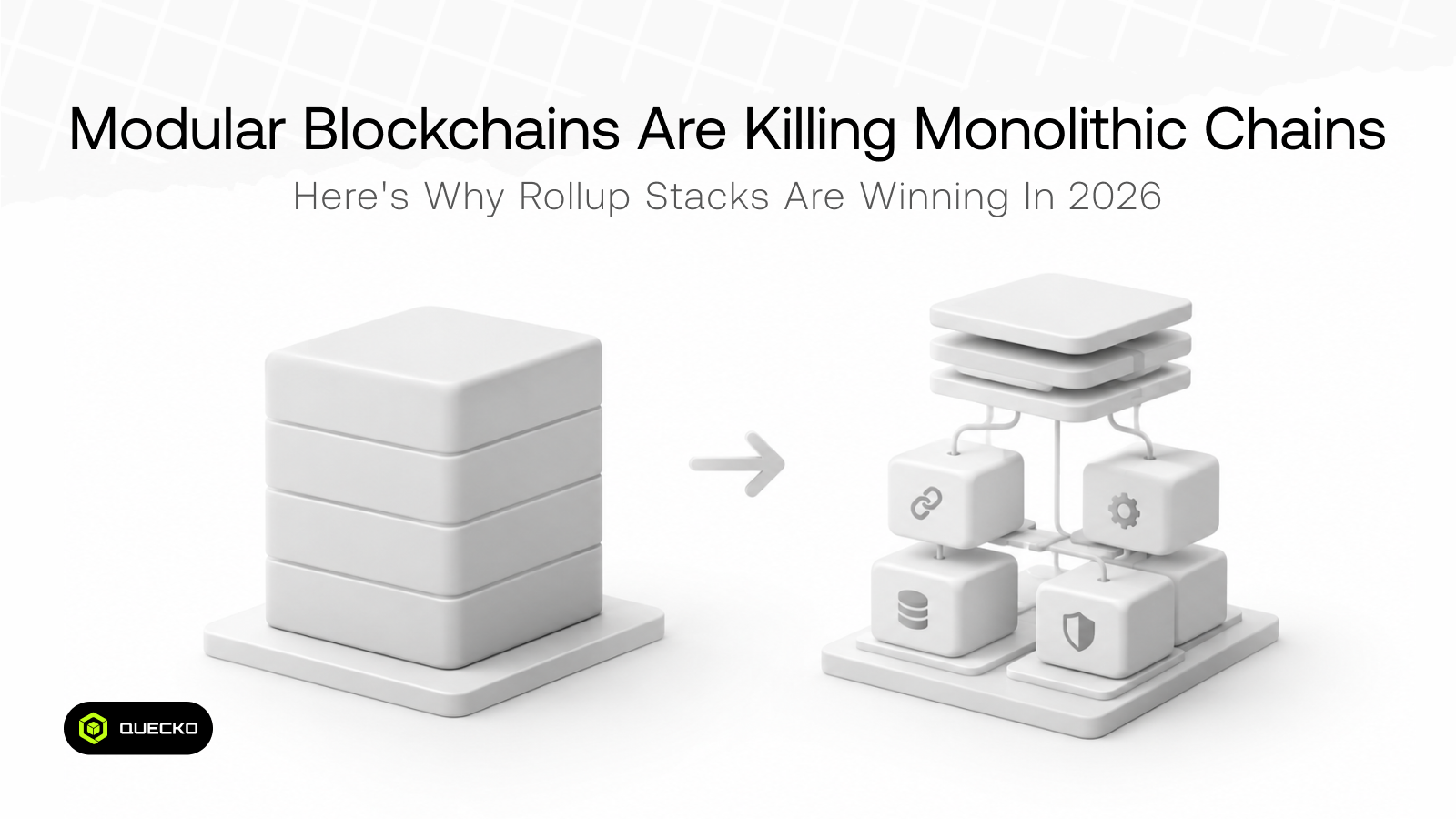
Modular Blockchains Are Killing Monolithic Chains — Here’s Why Rollup Stacks Are Winning in 2026
7 days ago
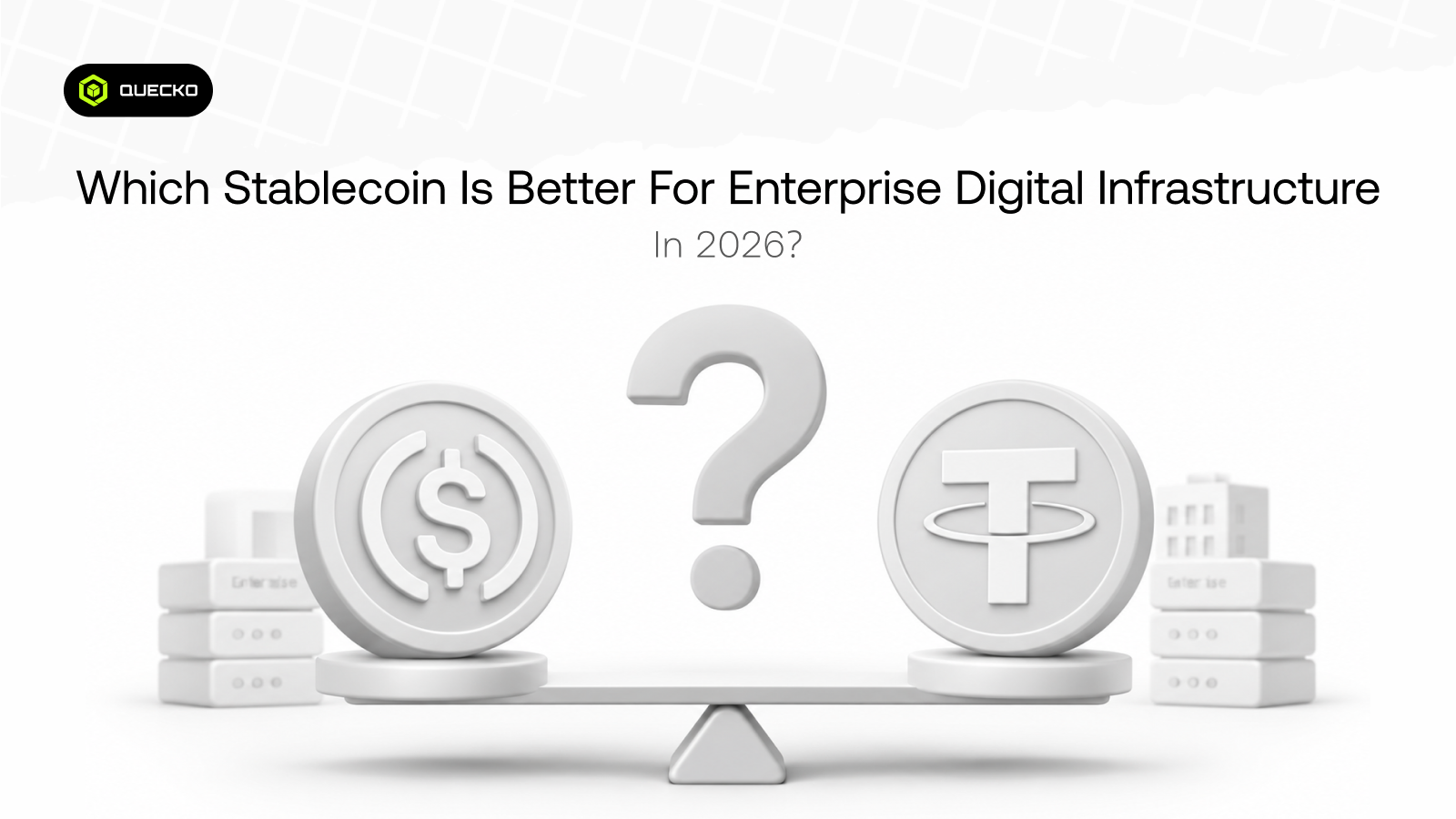
USDT vs USDC: Which Stablecoin Is Better for Enterprise Digital Infrastructure in 2026?
11 days ago

How Businesses Use Stablecoins for International Transfers
14 days ago