How the US–Israel–Iran War Is Destroying Demand: The Oil Market’s Hidden Crisis
Explore how the US–Israel–Iran conflict is disrupting oil markets, supply chains, Gold prices, and global demand worldwide.
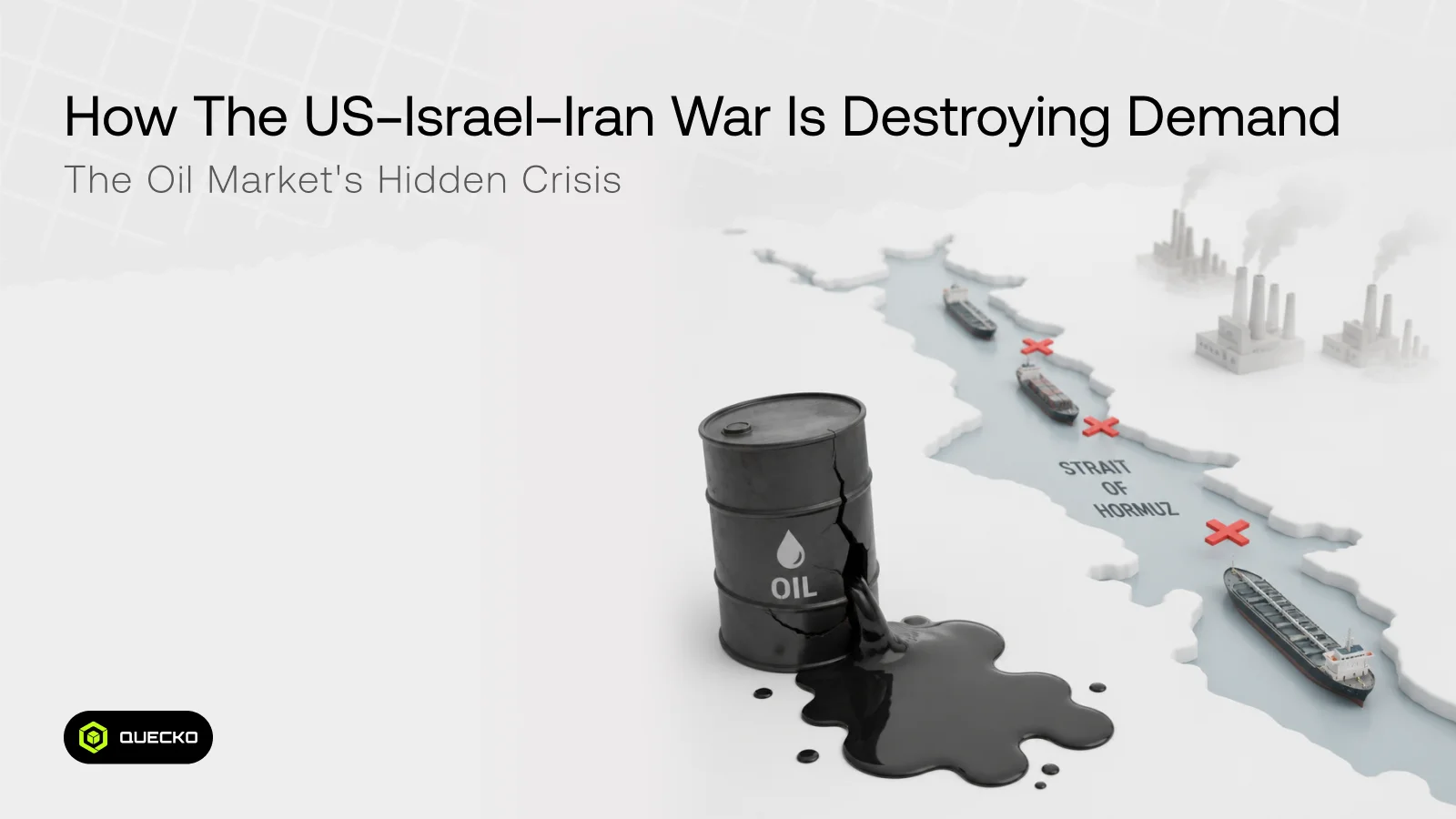
A few days back, a friend who runs a small import business sent me a message at 2 AM.
“Shipping costs are rising again. Clients are delaying orders. Everyone’s nervous.”
That single message explains the current situation better than most TV debates.
Whenever conflict breaks out in the Middle East, people immediately think about oil. Headlines start screaming about shortages, sanctions, and skyrocketing fuel prices. However, this time, the real damage is occurring somewhere quieter, within business confidence, consumer behavior, and global demand.
The growing tension involving the United States, Israel, Iran, and the wider Middle East is creating fear across the world economy. And almost every conversation leads back to one place: the Strait of Hormuz.
News coverage and viral Middle East Images shared across social media are also increasing public anxiety around the conflict.
Global traders are also discreetly observing Qatar energy and Ras Laffan, as any regional instability could impact the stability of exports and the determination of prices.
The Strait of Hormuz is considered as one of the most sensitive trade routes in the world since it has a huge volume of the global oil supply and sea lanes passing through it every day. Countries like Saudi Arabia depend heavily on it to keep their export operations running smoothly without interruption.
Small interruptions in the locality of oil wells can also immediately change the sentiment of market participants and experts.
This directly impacts oil flows and regional energy infrastructure systems, which become unpredictable whenever tensions rise.
The problem is simple.
When the world starts worrying about the Strait of Hormuz, markets panic first and ask questions later.
Why Is Everyone Talking About the Strait of Hormuz?
Because the world economy still depends on it more than most people realize.
Every time tensions rise near the Strait of Hormuz, shipping companies become cautious. Insurance costs rise. Traders react emotionally. Investors rush toward safe assets.
Even rumours coming from Iranian officials across the Middle East can move markets within minutes. Even signals from Iranian officials or developments in the wider Middle East can move markets within minutes. One statement about military action or blocked shipping lanes is enough to create uncertainty across the entire global oil market.
A recent case involving an Iranian container ship added more tension to already fragile shipping expectations.
Growing fears around the Iranian nuclear program are also adding pressure to already unstable global markets. The International Atomic Energy Agency has also faced growing international attention as tensions around regional nuclear activity continue to increase.
This is exactly why the price of gold has resumed its upward trajectory. Investors raising their bets on gold futures indicate they might be protecting their investments given the persistent geopolitical tensions.
On the other hand, discussions on global GDP growth have taken on an extra guarded tone with economists waiting for a slower expansion to push through the uncertainty.
Recently, analysts have warned that an attack by crude oil tankers on Kharag Island or further escalation near the Strait of Hormuz could cause serious problems. During several periods of international buying and selling of Brent crude, the concerns have already resulted in a temporary rise in oil prices.
Indeed, updated projections of global GDP growth are now being tied mainly to the consideration of geopolitical stability.
And uncertainty is expensive.
Recently, analysts warned that attacks on a crude oil tanker, Kharg Island, or further escalation near the Strait of Hormuz could trigger serious disruptions. The fear alone already caused temporary oil price jumps in global trading sessions for Brent crude. Experts at the Centre on Global Energy Policy believe prolonged uncertainty could weaken business confidence far beyond energy markets.
Recently, analysts have warned that an attack by crude oil tankers on Kharag Island or further escalation near the Strait of Hormuz could cause serious problems. On the other hand, this is not the reality for many people.
This global uncertainty is no longer only about oil supplies. It is about shrinking confidence.
The Real Problem Is Demand, Not Just Oil Production
Yes, energy traders are watching oil production numbers and Brent crude carefully.
The movement in Brent oil prices and Brent crude oil has become one of the key indicators of global uncertainty.
But businesses around the world are facing a different problem: hesitation.
Factories are slowing orders. Retailers are becoming cautious. Consumers are spending less because nobody knows where things are heading next.
That is how fear quietly destroys demand.
While over time, domestic energy capacity in the United States might have become stronger, it is still not able to get rid of the global market anxiety completely. The economy of the United States is so interconnected with international trade, shipping routes, and financial systems that the changes in one area invariably affect it. A lot of analysts and even the Energy Information Administration think that fluctuating oil prices will keep having a negative effect on consumer confidence and business spending globally.
Whenever turmoil in the Middle East spills over, the ripples are felt everywhere: factories, ports, airlines, supply chains, and at the same time, global energy markets.
This is the reason why the United States constantly pays attention to what is happening near the Strait of Hormuz.
How Are Supply Chains Being Hit Again?
This is probably the most overlooked part of the story.
Global supply chains were already under pressure after the pandemic years. Now geopolitical tensions are making things worse again.
Many economists now warn that fresh Supply chain bottlenecks could appear if regional tensions continue rising.
When shipping companies reroute cargo or delay deliveries, costs rise almost immediately. Businesses then pass those costs to customers. Some companies simply reduce imports because uncertainty becomes too risky.
Weak supply chains eventually slow the entire economy.
You can already see the pressure building in commodity markets and rising aluminium prices. Rising aluminium prices are hurting manufacturers, while transport costs continue to climb across several regions.
Even sectors connected to liquified natural gas and Ras Laffan are watching the situation carefully because energy routes in the Gulf remain extremely sensitive. Ports like Bandar Asaluyah are also part of this fragile network, reminding traders how quickly regional tensions can ripple through LNG and shipping hubs.
Several planned LNG Megaprojects are also facing uncertainty as investors become more cautious about long-term regional stability. Even the South Pars gas field, one of the world’s largest, is being watched closely for signs of disruption.
Many countries are also more cautious about turning to the availability of natural gas in the future if shipping tensions increase.
One disruption near the Strait of Hormuz can ripple through multiple industries within days.
Why Are Gold Prices Rising So Fast?
Because investors get nervous when geopolitical risks grow.
Whenever markets fear instability, across the Middle East, money usually moves toward safer assets. Trading activity in gold futures often increases sharply whenever conflict risks begin threatening global trade stability. That explains why Gold prices reacted so strongly after recent developments involving Israel and Iran.
At the same time, energy traders pushed Crude oil prices higher due to concerns about future disruptions.
But what makes this situation dangerous is the combination of both.
Higher fuel costs hurt businesses. Rising safe-haven demand signals fear. Weak confidence and pressure on the Consumer Price Index slow spending. Suddenly, economies start cooling down even before an actual supply shock fully arrives.
Rising oil prices are also increasing pressure on transportation industries, manufacturing sectors, and regional energy facilities across major economies, and aluminium prices are compounding the strain on production budgets.
That is why many analysts believe the current situation is becoming bigger than a normal oil story for global energy markets.
What Role Does Saudi Arabia Play?
Right now, everyone is watching Saudi Arabia carefully. Reports from the International Energy Agency suggest that prolonged regional instability could reshape future energy investment strategies.
As one of the world’s largest exporters, Saudi Arabia has enormous influence over oil supplies and market stability. Any extended volatility should realign Gulf output, forcing traders to reconsider delivery expectations.
Investors want to know whether the kingdom can help calm markets if tensions worsen further.
Can exports continue smoothly?
Can alternative shipping routes reduce pressure on the Strait of Hormuz?
Can diplomacy prevent a wider regional conflict?
These questions matter especially because the world economy is already viewed as fragile. In fact, besides the US, European Union leaders have also been keeping their eyes on the situation due to their concerns over energy security and possible disruptions in trade. Analysts at Korea Chair have also warned that ripple effects could reach Asian markets faster than expected.
And certainly, many companies don’t really need all the other international disruptions beyond the previous tough years.
The Energy Industry Is Facing a Confidence Crisis
This is what makes the situation different from older Middle East conflicts.
The modern energy industry does not only react to physical shortages. It reacts to uncertainty itself. Think of it as energy explained in human terms: when fear rises, decisions slow, and confidence disappears long before actual shortages hit. Growing volatility in oil prices, natural gas markets, and global energy markets is making long-term planning much harder for global businesses.
If companies believe shipping risks will rise, they delay decisions. If traders fear sanctions, they reduce exposure. If consumers expect inflation, they cut spending.
That is how confidence slowly disappears.
Meanwhile, concerns around hidden transport networks and shadow ships moving sanctioned cargo are adding more complications for regulators and global trade authorities focused on international security.
The United States is also balancing difficult Foreign Policy decisions while trying to avoid a larger regional escalation.
And businesses everywhere are stuck in the middle of it.
Quecko and the Shift Toward Digital Trust in a Volatile Oil Economy
While US, Israel, and Iran tensions keep affecting global oil markets and the rest of the energy world, especially through one of the world’s main shipping routes, the Strait of Hormuz, a very clear message emerges that there is not only uncertainty about actual energy supplies but that this is also affecting the whole global system of trade and the basis of mutual trust.
Every unexpected increase in Brent crude oil price, every disruption to the shipping lanes, and every shock to the supply chain show how the traditional system has become very vulnerable to Middle East geopolitical tensions.
This is exactly where platforms like Quecko start to matter.
Built on blockchain-based infrastructure, Quecko represents a shift toward more transparent and decentralized systems that can still function even when global energy markets are under stress. While energy infrastructure systems and energy facilities remain exposed to regional instability in the Middle East, digital systems built on Web3 principles aim to reduce dependence on single points of failure.
In today’s world, where even aluminium prices, Consumer Price Index, and global energy markets react instantly to every headline from the Middle East, businesses are slowly moving toward more verifiable and transparent digital solutions.
Quecko does not replace oil flows or energy systems; instead, it reflects a new layer of evolution, where trust, data, and global transactions can stay more stable, even when the Middle East remains uncertain, and markets continue reacting to every shift in Brent crude oil.
Conclusion
An oil crisis was the last thing on people’s minds. Actually, the real story that is unfolding is a quite different and much quieter one – a demand slowdown.
A minor conflict involving the US, Israel, and Iran is causing fear not only along the shipping routes, in commodity markets and business networks, but in many other places too. From rising aluminium prices to disruptions in distribution chains, tensions are spreading across a very large area of the Middle East.
And even as the headlines keep the focus on missiles and maritime threats, even more serious damage is happening quietly: confidence in domestic buyers, currency transactions, and global demand itself.
It is the economic pressure developing across the Strait of Hormuz.
FAQs
1. Why is the US–Israel–Iran conflict impacting global oil markets so strongly?
The Middle East is a central point where the world’s oil transportation routes, such as the Strait of Hormuz, meet; even small problems there could break the supply of cargo, oil, and electricity worldwide. This would, in turn, affect the economy of the whole world.
2. How does Brent crude oil react during geopolitical crises?
Usually, Brent crude oil first reacts to conflict news. The buyers begin pricing the fear, uncertainty, and supply problems efficiently way before anything really rare happens.
3. How are global energy markets and supply chains affected by this conflict?
When tensions within the Middle East are heightened, it slows down the traffic of ordinary maritime visitors, raises distribution charges, and creates uncertainty in global energy markets, which then spills over into currency, logistics, and business activities worldwide.
4. What role do inflation and the Consumer Price Index play in this crisis?
Higher fuel and transportation costs ultimately outweigh ordinary inflation, measured through the Consumer Price Index, affecting food, goods, and public housing costs for humans everywhere.
5. What is Quecko’s relevance in this kind of global uncertainty?
Quecko represents the shift toward blockchain-based transparency and decentralized systems, offering digital trust solutions that can support global systems when traditional structures like energy infrastructure systems and global trade networks face pressure from geopolitical instability.
Author

Khola Abbasi
Blockchain & Crypto Marketing SpecialistA writer with a focus on DeFi and smart contracts. I simplify technical topics through clear, engaging content. Sharing ideas, insights, and what I'm learning.
Date
6 months agoShare on